

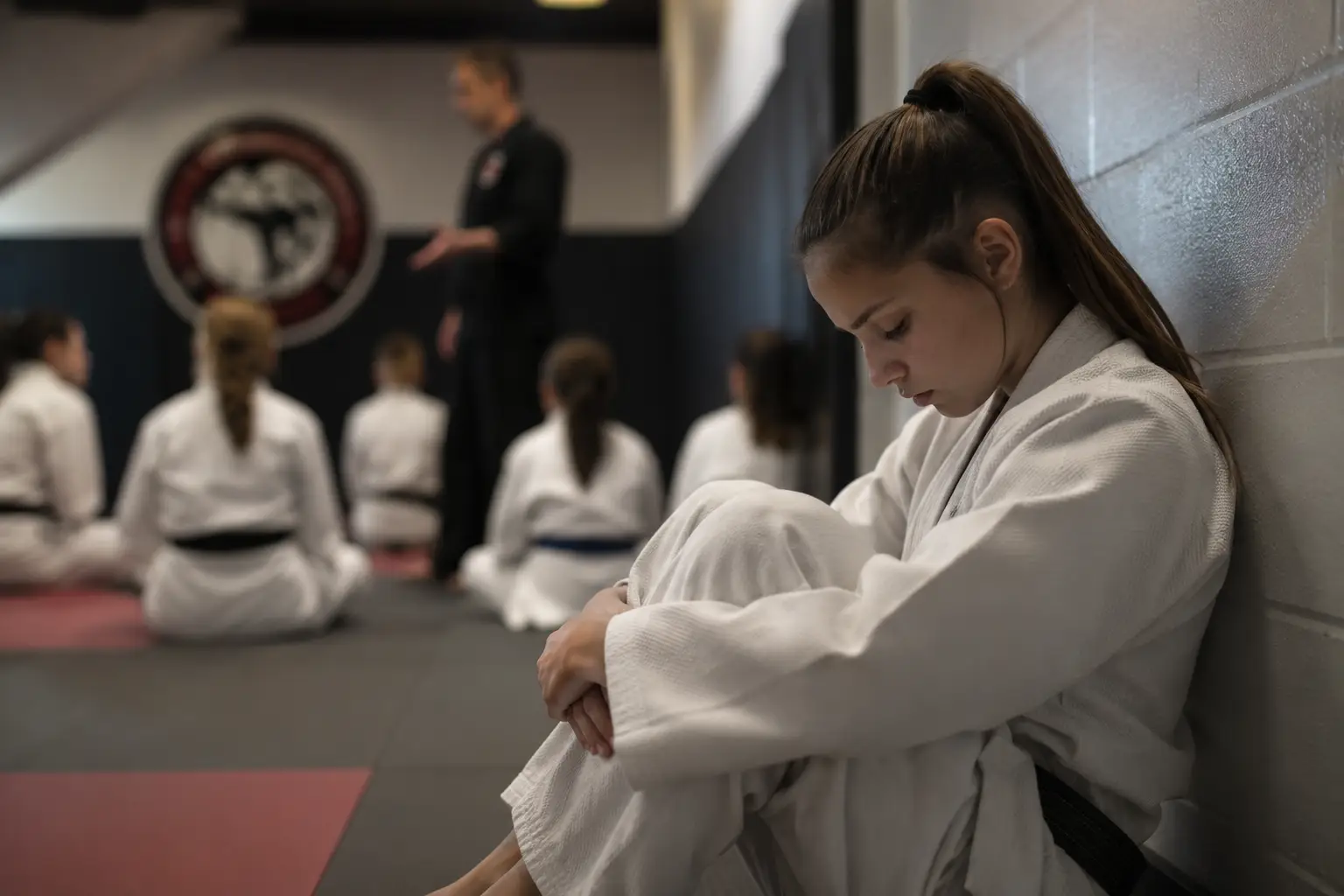
Understanding Sexual Misconduct, Grooming, and the Lack of Accountability in Martial Arts Organizations
By Rob Andress
Violence Prevention Specialist
Street Safe Self Defence Training Company
https://www.streetsafeselfdefence.com
Martial arts has changed countless lives for the better.
It teaches discipline, confidence, resilience, fitness, respect, and community. Most martial arts instructors are dedicated professionals who genuinely care about their students and work hard to create safe learning environments.
Yet there is a difficult conversation that many martial arts organizations still struggle to have openly.
The reality is that sexual assault, sexual misconduct, grooming, and abuse of authority have occurred within martial arts schools and organizations around the world.
This is not a martial arts problem.
It is a predator problem.
Just as predators have been found in schools, churches, youth organizations, sports programs, healthcare settings, and workplaces, some are attracted to environments where trust, authority, and access to vulnerable people already exist.
The martial arts community is not immune.
Is Sexual Abuse Common in Martial Arts?
This is a questions people never consider to ask.
The answer is that documented cases of sexual misconduct have occurred across numerous martial arts styles, federations, and organizations internationally.
While the overwhelming majority of instructors are ethical professionals, experts in safeguarding and abuse prevention recognize that environments built around authority, trust, mentorship, and close personal relationships can be exploited by predatory individuals.
The issue is not the martial art itself.
The issue is the misuse of authority by individuals who abuse trust.
Why Martial Arts Schools Can Be Vulnerable to Grooming
Most martial arts schools operate within a structured hierarchy.
Students are taught to:
- Respect instructors
- Follow direction
- Trust senior students
- Value loyalty
- Accept mentorship
These are valuable aspects of martial arts culture.
However, predators often seek environments where those same characteristics already exist.
Predators rarely appear threatening.
In fact, many are viewed as:
- Respected instructors
- Community leaders
- Mentors
- Role models
- Trusted friends
The danger is often not the instructor everyone worries about.
The danger may be the instructor everyone trusts.
What Is Grooming?
Grooming is a deliberate process used by predators to build trust, create emotional dependency, and gradually violate boundaries.
Research into grooming behaviours has identified common warning signs, including:
- Giving excessive attention to one student
- Creating “special” relationships
- Increasing private communication
- Isolating students from peers or family members
- Testing boundaries gradually
- Encouraging secrecy
- Creating emotional dependence
- Using authority to discourage questions
Grooming often develops over months or years.
Many victims do not immediately recognize what is happening because the behaviours are introduced gradually and often appear supportive at first.
Why Victims Often Do Not Report Abuse
Many people assume victims immediately report misconduct.
Unfortunately, that is often not the case.
Victims may remain silent because of:
- Fear of retaliation
- Fear of not being believed
- Fear of losing their martial arts community
- Embarrassment
- Shame
- Emotional attachment to the instructor
- Concern about damaging the organization
For younger students, these pressures can be even greater.
This is one reason why some cases remain hidden for years before becoming public.
The Governance Problem in Martial Arts
One of the most overlooked issues in martial arts is governance.
Many people assume there is a governing authority responsible for investigating complaints and ensuring accountability.
In reality, many martial arts schools operate independently.
Depending on the organization, there may be:
- No independent complaint process
- No external investigation mechanism
- No licensing authority
- No regulatory oversight
- No safeguarding requirements
- No disciplinary body with enforcement powers
Many associations can suspend membership.
Few possess the authority to compel investigations, gather evidence, or enforce sanctions beyond their own membership structure.
This creates a significant challenge for victims seeking accountability.
What Happens When Someone Reports Misconduct?
This is a question the martial arts industry rarely discusses openly.
In some cases, complaints are handled appropriately.
In other cases, individuals who raise concerns may find themselves:
- Ostracized
- Excluded
- Isolated
- Labelled as troublemakers
- Removed from positions
- Forced out of organizations
I experienced this personally a number of years ago, when in the presence of a very senior Instructor, his views of a students body, and his fascination with her was shared with me.
After attempting to pursue a complaint through the channels available to me, I found myself facing resistance rather than transparency.
Instead of accountability, I witnessed how organizational loyalty can sometimes outweigh the pursuit of truth.
That experience changed my perspective on governance within martial arts organizations.
The Cost of Protecting Reputations Instead of People
Every organization eventually faces a choice.
Protect people.
Or protect reputations.
When protecting reputation becomes the priority:
- Victims lose trust
- Communities divide
- Predators benefit
- Future complaints become less likely
The long-term damage caused by silence is almost always greater than the short-term discomfort of accountability.
Silence does not protect organizations.
It weakens them.
Warning Signs of an Unsafe Martial Arts Environment
Parents, students, and instructors should pay attention to:
Instructor Red Flags
- Excessive private communication with students
- Favouritism toward specific individuals
- Discouraging parental involvement
- Private meetings without transparency
- Resistance to oversight
- Dismissing legitimate concerns
Organizational Red Flags
- No written code of conduct
- No complaint procedure
- No safeguarding policies
- No screening processes
- Lack of accountability mechanisms
- Protection of reputation over transparency
Healthy organizations welcome accountability.
Unhealthy organizations fear it.
What Good Martial Arts Organizations Do Differently
The best martial arts schools understand that safeguarding protects everyone.
Strong organizations implement:
- Written codes of conduct
- Professional boundaries
- Background screening
- Transparent complaint procedures
- Incident documentation
- Independent review processes where possible
- Parent involvement policies
- Ongoing safeguarding education
Good instructors should never fear transparency.
Transparency protects them as much as it protects students.
Questions About Sexual Misconduct in Martial Arts
Can martial arts instructors groom students?
Yes. Like coaches, teachers, clergy members, and other authority figures, martial arts instructors can abuse positions of trust if proper safeguards are not in place.
What are the warning signs of grooming in a dojo?
Warning signs can include excessive attention, private communication, secrecy, isolation from peers, emotional dependency, and inappropriate boundary violations.
Who regulates martial arts schools in Canada?
Many martial arts schools operate independently. While associations and federations exist, there is often no single governing authority responsible for investigating complaints across all organizations.
What should someone do if they experience misconduct in a martial arts school?
Individuals should consider documenting incidents, preserving communications, contacting law enforcement when criminal conduct is involved, and seeking support through victim services and legal resources.
Why is accountability important in martial arts?
Accountability protects students, instructors, organizations, and the integrity of martial arts itself. Transparency helps prevent abuse and strengthens trust.
Key Topics Covered in This Article
This article addresses:
- Sexual assault in martial arts
- Sexual misconduct in dojos
- Grooming by martial arts instructors
- Martial arts student safety
- Abuse of authority in martial arts
- Governance in martial arts organizations
- Reporting misconduct in martial arts
- Victim support and accountability
- Warning signs of predatory behaviour
- Safeguarding policies in martial arts schools
Resources
Sport Integrity Canada
https://sportintegritycommissioner.ca
Canadian Centre for Child Protection
https://www.protectchildren.ca
Government of Canada – Victim Services
Respect Group
About the Author
Rob Andress is a Violence Prevention Specialist and the founder of Street Safe Self Defence Training Company, one of Canada’s leading providers of violence prevention, behavioural awareness, personal safety, and victimization reduction education.
Rob has spent decades studying violence, human behaviour, victim selection, authority dynamics, and the factors that contribute to victimization. Through Street Safe, he and Beth Andress educate schools, healthcare organizations, municipalities, corporations, and communities across Canada.
Street Safe Self Defence Training Company
🌐 https://www.streetsafeselfdefence.com