

Self defence workshops are focused training sessions that combine physical techniques, situational awareness, and psychological preparedness to help you protect yourself in real-world situations. Unlike traditional martial arts classes, these sessions require no prior experience and no athletic background. They are built for beginners, for people of all fitness levels, and for anyone who wants to feel safer and more confident moving through the world. Whether you are looking for a two-hour introduction or a weekend intensive, the right personal safety course exists for you.
What self defence workshops actually cover
Most people expect a self defence workshop to be a room full of people throwing punches. The reality is far more practical. Situational awareness, verbal boundary setting, and de-escalation are core components alongside physical techniques in most programmes. That combination matters because most dangerous situations can be avoided or defused before they become physical.

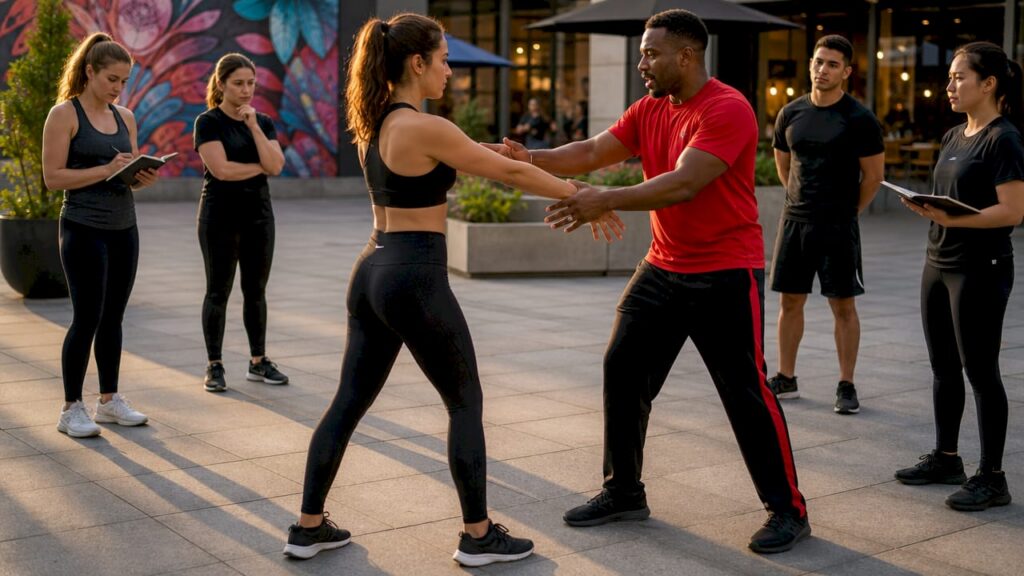
A typical session blends interactive lecture, group discussion, and hands-on practice. Workshops blend interactive lecture and practical scenarios to build both skill and confidence. Participants practise techniques with partners and receive direct feedback during the session.
What you will cover in most workshops:
- Situational awareness and reading your environment
- Assertive verbal boundary-setting and de-escalation
- Physical escape manoeuvres for common grabs and holds
- Body language as a deterrent
- Legal context for self-protection in Canada
Pro Tip: Wear comfortable athletic clothing and bring water. Training equipment is often provided, but confirm with the organiser before an intensive course.
7 types of self defence workshops and who they suit best
1. Women-only empowerment workshops
Women-only self defence seminars are among the most widely available formats. Women’s seminars teach five basic techniques that cover the vast majority of likely real-world situations, focusing on practical skills rather than complex moves. That focus keeps the learning curve low and the confidence gains high. Scenario-based practice with partners of varied sizes makes the skills feel real, not theoretical.
2. Beginner workshops for first-timers
Beginner workshops focus on situational awareness, assertive verbal boundary-setting, and physical escape manoeuvres, and are accessible to participants aged 14 and up. No prior experience is required. These sessions are the right starting point if you have never trained before and want a low-pressure introduction to personal safety skills.
3. Fitness-inclusive workshops
Not every participant can drop to the floor or sprint across a room. Workshops adapted for various fitness levels use tailored instruction and supportive environments to make techniques work for the body you have today. Instructors modify drills so that participants with mobility limitations, chronic conditions, or lower fitness levels can still build real skills.
4. Youth and teen workshops
Youth workshops address the specific situations young people face, from school corridors to online threats that spill into physical confrontations. Some workshops require parental accompaniment for minors aged 11–14, and registration often involves privacy measures such as selective address disclosure. That structure protects participants before they even walk through the door. Streetsafeselfdefence offers high school self-defence programmes that prioritise violence prevention over fighting techniques.
5. Weekend intensive programmes
For participants who want depth, weekend intensives deliver it. Short-format workshops last 2–3 hours, while intensive weekend options total 16–20 hours. That volume of practice time builds muscle memory that a single afternoon session cannot. Costs range from free or $50 for short sessions to $299–$599 for immersive courses, reflecting the difference in depth and instructor time.
6. LGBTQ+ inclusive and trauma-sensitive workshops
Participants who have experienced trauma, harassment, or violence need more than technique instruction. Trauma-sensitive workshops create environments where physical contact is introduced gradually and participants control their own pace. These sessions use trauma-informed environments focusing on empowerment and boundary-setting to ease anxiety and build genuine confidence. The group dynamic itself becomes a source of support.
“Instructors strive for trauma-informed environments to reassure anxious participants and foster empowerment through boundary-setting and supportive group work. Teaching approaches are sensitive to past experiences and discomfort with physical contact.”
— Rose City Self-Defense, Portland.gov
7. Employee self defence workshops
Workplace safety training has expanded well beyond fire drills. An employee self defence workshop teaches staff to recognise threat escalation, use verbal de-escalation, and respond physically only as a last resort. These sessions suit retail workers, healthcare staff, real estate professionals, and anyone whose job puts them in contact with the public. Streetsafeselfdefence delivers mobile self-defence training directly to workplaces, removing the logistical barrier of getting a team to a training centre.
How to choose the right workshop for your needs
The right session depends on four factors: your goal, your schedule, your budget, and your comfort level with physical contact.
| Feature | Short session (2–3 hrs) | Weekend intensive (16–20 hrs) |
|---|---|---|
| Cost range | Free to $50 | $299–$599 |
| Skill depth | Foundational awareness and escape | Full technique library with repetition |
| Fitness requirement | Low | Low to moderate |
| Best for | First-timers, busy schedules | Committed learners, group bookings |
| Trauma-informed options | Common | Varies by provider |
| Age accommodation | 14 and up (varies) | 14 and up, some 11+ with adult |
Instruction style matters as much as duration. A trauma-informed approach, where instructors introduce contact gradually and never force participation, produces better outcomes for most adults than a high-intensity drill format. Group size also affects quality. Smaller groups allow instructors to correct technique and give individual feedback, which accelerates learning.
Instructor credentials are worth checking. Look for facilitators with backgrounds in violence prevention, community safety, or recognised self-protection frameworks, not just sport martial arts. The legal context of self-defence in Canada is a topic that qualified instructors cover and sport-focused trainers often skip entirely.
Pro Tip: Ask any organiser whether their curriculum includes verbal de-escalation and legal context. If the answer is no, the programme is teaching fighting, not self-defence.
Location and scheduling flexibility matter for group bookings. Mobile training providers like Streetsafeselfdefence bring the session to your workplace, school, or community centre, which removes the barrier of travel and increases attendance.
How self defence workshops build confidence beyond technique
Physical technique is only part of what a good workshop delivers. The psychological gains are just as significant and often more lasting.
Participants who complete personal safety courses consistently report:
- Reduced anxiety about moving through public spaces alone
- Greater confidence in setting verbal boundaries with strangers and acquaintances
- Improved ability to read body language and environmental cues
- A sense of community with other participants who share similar concerns
- Clearer understanding of when and how to act, which reduces freeze responses
The voice is one of the most underrated tools in self-protection. A loud, clear verbal command disrupts an attacker’s plan and signals to bystanders that something is wrong. Workshops that practise this skill in realistic scenarios produce participants who can actually use it under stress, not just in theory.
Trauma-informed instruction removes the fear that training itself will be distressing. When instructors build trust before introducing physical contact, participants stay engaged and retain more. The supportive group dynamic also matters. Practising with others who share your concerns normalises the experience and reduces shame around feeling vulnerable. For a deeper look at why this approach is especially important for specific communities, Streetsafeselfdefence’s article on violence prevention for Indigenous women makes the case clearly.
Carrying non-lethal personal safety options can complement workshop training, but instructors consistently emphasise that awareness and de-escalation are the first line of defence, not tools or gadgets.
Key takeaways
The most effective self defence workshops combine trauma-informed instruction, practical physical techniques, and situational awareness training accessible to all fitness levels and ages.
| Point | Details |
|---|---|
| Format variety matters | Sessions range from 2–3 hour introductions to 16–20 hour weekend intensives depending on your goals. |
| No experience required | Beginner workshops accept participants aged 14 and up with no prior training or athletic background. |
| Trauma-informed instruction | The best programmes introduce physical contact gradually and prioritise participant comfort throughout. |
| Beyond physical technique | Verbal boundary-setting, situational awareness, and de-escalation are as important as physical moves. |
| Mobile training removes barriers | Providers like Streetsafeselfdefence bring sessions to your location, improving access for groups and workplaces. |
Why I think most people choose the wrong workshop first
Rob here. After years of watching people sign up for self-protection seminars, I have noticed a consistent pattern. People choose the most physically intense option available because it feels like it will make them tougher. Then they drop out after one session because the format does not match their actual needs or comfort level.
The workshops that produce lasting change are rarely the most aggressive ones. They are the ones where the instructor earns trust before asking participants to practise a wrist release with a stranger. A two-hour session that teaches you to recognise a pre-attack posture and say “stop” with conviction will serve you better than a weekend of complex joint locks you will never remember under stress.
Accessibility is not a compromise. A session designed for all fitness levels is not a watered-down version of “real” training. It is a more honest programme, because it acknowledges that most people are not going to train three times a week for years. The goal is skills that work the first time you need them, not a black belt.
My honest recommendation: start with a beginner or women-focused session if you are new to this. Get comfortable with the format, the instructor, and the group. Then decide whether you want more depth. The confidence you build in that first two hours will tell you everything about whether the programme is right for you.
— Rob
Practical self-defence training that comes to you
Personal safety training should be accessible, not a logistical challenge. Streetsafeselfdefence delivers mobile self-defence workshops directly to your location, whether that is a workplace, school, community centre, or private group setting.
Sessions are designed for all ages and fitness levels, with trauma-informed instruction and real-world focus built in from the start. From employee self-defence seminars to youth programmes and women-focused personal safety courses, Streetsafeselfdefence tailors each session to the group in front of them. If you are ready to build skills that actually work, visit streetsafeselfdefence.com to book a session or ask about scheduling for your group.
FAQ
What is a self defence workshop?
A self defence workshop is a structured training session teaching situational awareness, verbal boundary-setting, and physical escape techniques for real-world safety. Most sessions require no prior experience and suit all fitness levels.
How long does a self defence workshop take?
Short-format workshops typically run 2–3 hours, while weekend intensive programmes total 16–20 hours of instruction and practice.
Are self defence workshops suitable for beginners?
Yes. Beginner workshops are specifically designed for participants with no prior training, starting with awareness and simple escape techniques before progressing to physical drills.
Can minors attend self defence workshops?
Most workshops accept participants aged 14 and up independently. Those aged 11–14 often require a parent or guardian to accompany them, and registration policies vary by organiser.
What should I wear to a self defence workshop?
Wear comfortable athletic clothing that allows free movement. Training equipment is often provided, but confirm with the organiser before attending an intensive course.
