


Learning how to protect your phone from pickpockets starts with awareness, smart habits, and practical security steps when you are in public places.
Here are the most effective habits to start right now:
- Carry your phone in a zippered front pocket, an inside jacket pocket, or a crossbody bag worn in front with the zipper facing your body
- Never use a back pocket, an open tote bag, or an outer backpack pocket in a crowd
- Enable biometric authentication (Face ID or fingerprint) and set a short auto-lock timer
- Keep a firm grip on your phone in busy areas; avoid scrolling while walking through crowds
- Have Find My iPhone or Android’s Find My Device set up and tested before you need it
- Know your phone’s 15-digit IMEI number and keep it recorded somewhere separate from your device
Pro Tip: A phone lanyard or wrist strap physically tethers your device to your body. A thief who grabs it will feel immediate resistance, and most will let go rather than escalate.
Table of Contents
- How to carry your phone to prevent theft in public
- What phone theft protection features should you enable?
- How does biometric authentication protect your phone and apps?
- What behaviours reduce your risk of being targeted by pickpockets?
- What should you do immediately if your phone is stolen?
- How self-defence training builds the awareness that protects your belongings
- Key takeaways
How to carry your phone to prevent theft in public
Physical placement is your first line of defence. Carry your phone in a zippered front pocket, an inside jacket pocket, a belt bag worn front-facing, or a crossbody bag with the zipper turned inward. These positions keep the phone against your body and out of easy reach.
Back pockets are the most common theft point. Open tote bags, outer backpack pockets, and loose hoodie pockets are nearly as risky because a thief can reach in without you feeling a thing. If you are at a café or restaurant, the phone stays in your pocket, not on the table.
How you hold your phone matters just as much as where you store it. Grip it with two hands close to your chest rather than dangling it loosely at your side. When you need to check a map or send a message, step to the side and put your back against a wall first.
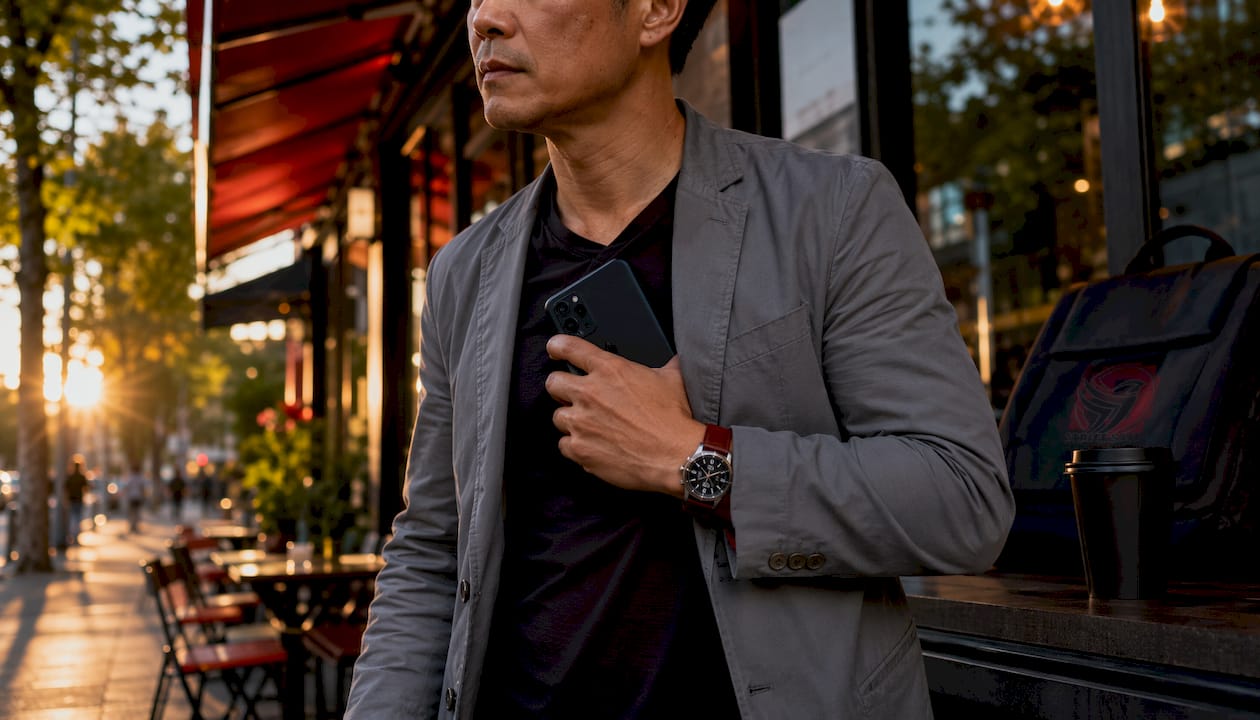
Pro Tip: A phone lanyard or wrist strap is one of the most practical anti-theft accessories available. Attaching your phone to your body adds physical resistance that deters snatch-and-run attempts far more reliably than a deep pocket alone.
What phone theft protection features should you enable?
Built-in theft protection features on modern smartphones are genuinely powerful, but only if you activate them before your phone goes missing.
- Find My iPhone / Find My Device (Android): Enable these now and test them from another device. They let you locate, lock, or remotely erase your phone
- Theft Detection Lock: Android’s AI-powered feature uses motion sensors, Wi-Fi, and Bluetooth to detect a theft motion and automatically lock your screen
- Offline Device Lock: If a thief disables your internet connection, this feature locks the screen after a short offline period, preventing them from hiding the device from tracking
- Remote Lock: Visit android.com/lock from any browser, enter your verified phone number, and lock your screen immediately
- Auto-lock timer: Set it to 30 seconds or one minute. A phone that locks itself quickly gives a thief almost no window to access your data
- Lock screen notifications: Disable sensitive notification previews so that password reset codes and banking alerts do not appear on a locked screen
Location services should remain active, and your device’s settings should allow tracking even when the phone is offline. Recovery apps have limited use if these configurations are never set up.
How does biometric authentication protect your phone and apps?
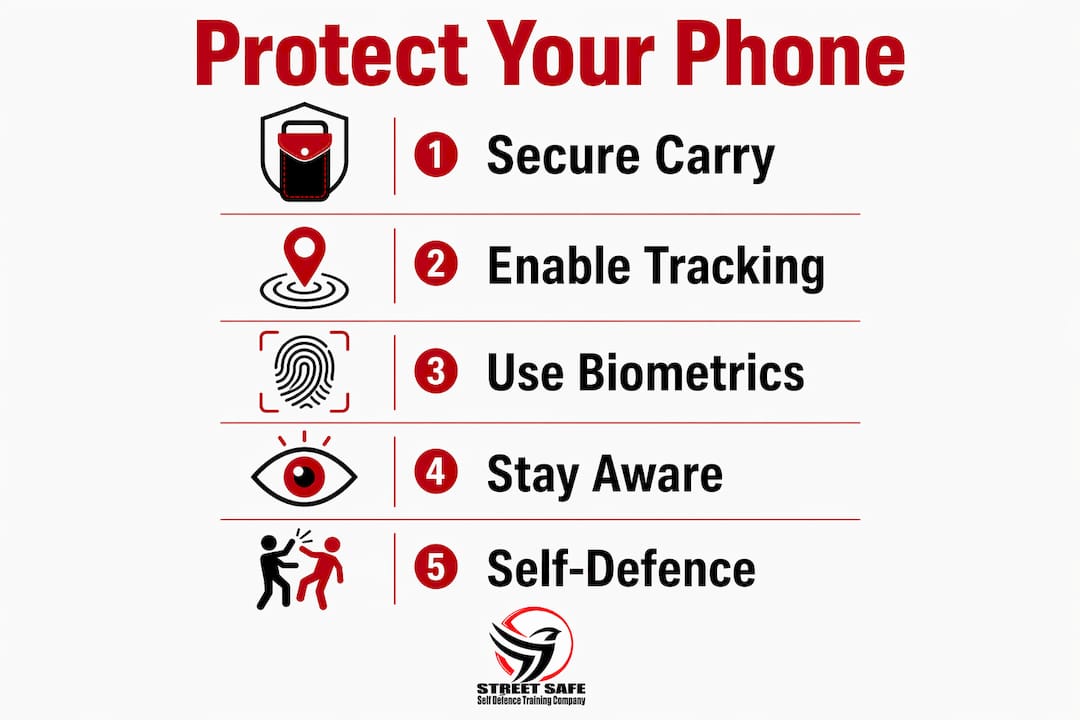
Biometric authentication, meaning Face ID or fingerprint recognition, is the single most effective way to block a thief from accessing your phone after it is stolen. A PIN can be watched. A face or fingerprint cannot be copied from across a room.
Law enforcement consistently warns about shoulder-surfing, where a thief watches you enter your passcode before making their move. Biometrics eliminate that vulnerability entirely. If you do use a PIN, make it at least six digits and avoid obvious combinations like birthdays or repeating numbers.
Extend biometric protection beyond the lock screen. Enable fingerprint or Face ID access for banking apps, payment apps, and any app that holds sensitive personal data. On Android, the Private Space feature lets you create a separate, locked area for your most sensitive apps. On iPhone, you can require Face ID to open individual apps and hide them from the main screen. Disable wallet access and sensitive notifications from the lock screen entirely.
What behaviours reduce your risk of being targeted by pickpockets?
Pickpockets choose easy targets. Dangle-scrolling, walking through a crowd with your phone loosely in hand, is one of the clearest signals that you are not paying attention.
- Put your phone away before entering a crowded space, not after
- Stand with your back to a wall or in a corner when you need to use your phone in public
- Keep your bag zipped and worn in front, especially on transit
- Watch for sudden bumps, unexpected encroachments, or strangers offering unsolicited help. These are common distraction tactics
- Never set your phone on a table, counter, transit seat, or airport security bin
- Avoid filming or photographing in crowds with your phone held out loosely
Situational awareness is a skill, not a personality trait. You can build it deliberately through practice and training, and it applies to every personal item you carry, not just your phone.
What should you do immediately if your phone is stolen?
Speed is everything. The faster you act, the less damage a thief can do.
- Lock the device remotely. Use Find My iPhone or Find My Device from another phone or computer. On Android, visit android.com/lock. This is your first move
- Contact your carrier. Report the theft and ask them to suspend service and block both the SIM and the IMEI number. Blocking the IMEI prevents the phone from connecting to any network, even with a new SIM
- Record your IMEI. The Canadian Centre for Cyber Security recommends keeping your phone’s 15-digit IMEI number stored somewhere separate from your device. Police and carriers need it to block and potentially recover the phone
- Change your email password first. Email controls password resets for every other account. Secure it before anything else
- Update banking and payment passwords. Remove the stolen device from trusted devices in your accounts and sign out remotely
- File a police report. You will need it for insurance claims, and providing the IMEI gives officers a real tool for recovery
Do not chase a thief. Your safety comes first. Use tracking to provide information to law enforcement rather than to confront anyone directly.
How self-defence training builds the awareness that protects your belongings
Physical security habits and situational awareness are not separate skills. They reinforce each other, and both can be taught.
Streetsafeselfdefence delivers reality-based, trauma-informed training that goes well beyond physical techniques. The programme builds the kind of mental readiness that changes how you move through public spaces: how you read a crowd, recognise a distraction tactic, and position your body to reduce vulnerability. That same awareness extends naturally to how you handle your phone, your bag, and your personal space.
Participants across Streetsafeselfdefence’s courses, from high school students to real estate professionals, consistently report that the training shifts their default posture from reactive to prepared. That shift is what self-defence for beginners actually looks like in practice: not fighting back, but not being caught off guard in the first place. Training is available in as little as five hours, delivered directly to your location across Canada.
To protect your phone from pickpockets, avoid predictable habits such as leaving your device visible on tables or in open pockets.
These simple habits help protect your phone from pickpockets while improving your overall personal safety awareness.
Key takeaways
Keeping your phone safe from pickpockets requires secure physical carrying habits, active theft protection features, and the situational awareness to recognise and avoid risky situations before they escalate.
| Point | Details |
|---|---|
| Carry securely | Use a zippered front pocket, inside jacket pocket, or front-worn crossbody bag; never a back pocket. |
| Enable protection features | Set up Find My, Theft Detection Lock, Offline Device Lock, and Remote Lock before your phone goes missing. |
| Use biometrics | Face ID or fingerprint recognition blocks shoulder-surfing and prevents access after theft. |
| Act fast after theft | Lock remotely, block SIM and IMEI with your carrier, and change your email password first. |
| Build situational awareness | Reality-based training, like Streetsafeselfdefence’s programme, develops the habits that reduce theft risk daily. |
Streetsafeselfdefence brings mobile safety training directly to you, anywhere in Canada. Whether you are an individual, a school group, or a corporate team, the programme builds real-world awareness and confidence in as little as five hours. Book your session today and walk away prepared.