

A self-defense lesson is a structured training session that teaches practical awareness, de-escalation skills, and physical techniques to protect yourself in real-world situations. Most people assume these classes require athletic ability or prior martial arts experience. They do not. Practical programmes target ages 14 and older with no fitness prerequisite, making personal safety training genuinely accessible to everyone. The core insight is this: about 90% of effective self-defence relies on awareness and de-escalation, not physical force. Physical techniques are the last resort, not the main event.
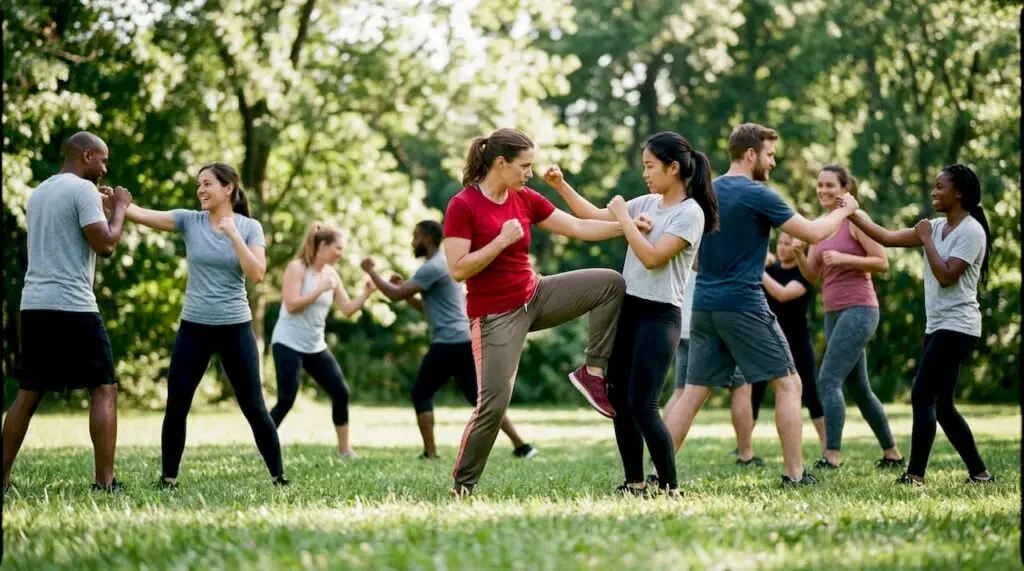
What do you need before starting a self-defense lesson?
Preparation for your first self-defence class is simpler than most people expect. You do not need a gym membership, a black belt, or even a high fitness level. What you do need is the right mindset and a few practical basics.
Physical readiness and age

Self-defence programmes designed for beginners accept participants from age 14 upward, regardless of fitness level. The techniques taught rely on body mechanics, not strength. A 55-year-old with no athletic background can learn the same foundational skills as a 20-year-old athlete.
What to wear and bring
- Comfortable, flexible clothing you can move freely in (athletic pants and a t-shirt work perfectly)
- Flat, closed-toe shoes or bare feet depending on the training surface
- A water bottle and a willingness to get slightly out of your comfort zone
- A notebook if you want to record key concepts after class
Mental readiness
The most important thing you bring to a self-protection course is openness. Effective classes teach thinking and responding rather than fighting. That shift in mindset, from reactive to aware, is what makes training stick. Expect to feel a little awkward at first. That feeling fades quickly.
Finding a legitimate class
Training formats range from 90-minute workshops to 8-week community courses with weekly 60-minute sessions. Look for instructors who emphasise prevention and scenario-based learning over sport or competition. Streetsafeselfdefence offers mobile training that comes directly to you, removing the barrier of finding a facility.
Pro Tip: Ask any prospective instructor whether their curriculum covers verbal boundary-setting and de-escalation. If the answer is no, keep looking.
What happens during a typical self-defense class?
Knowing what to expect removes the anxiety of walking into your first session. A well-structured class follows a clear progression from awareness to action.
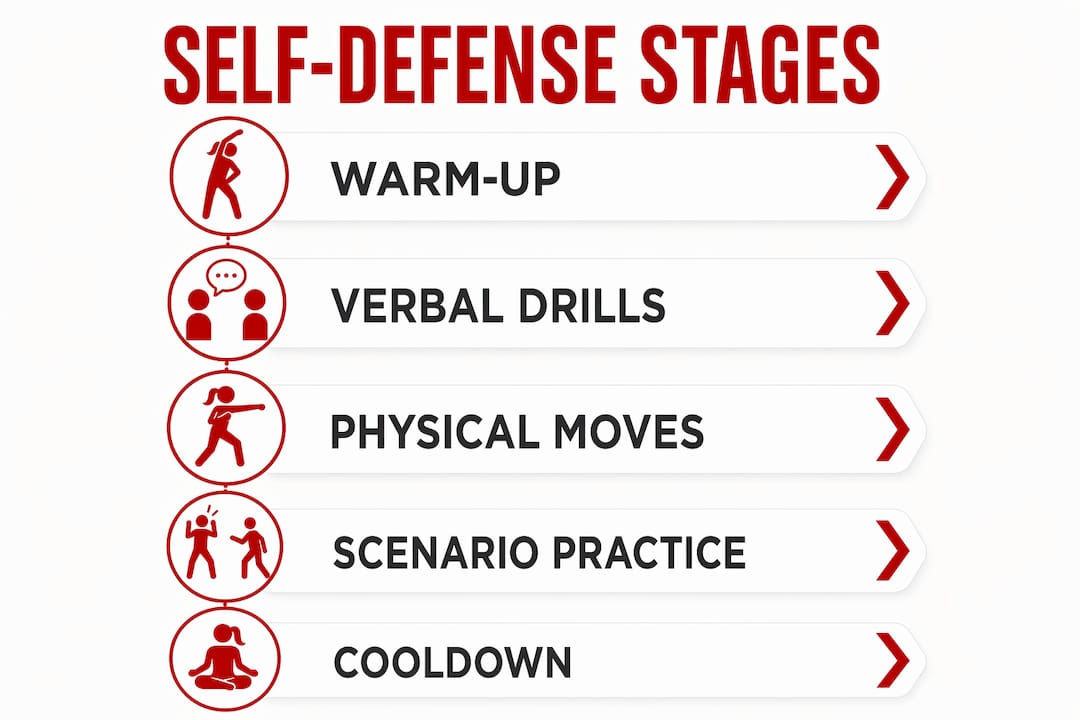
- Warm-up and situational awareness training. The session opens with light movement and a discussion of how predatory behaviour works. You learn to read your environment, identify exits, and recognise pre-attack indicators. This is where prevention and boundary-setting take centre stage.
- Verbal de-escalation practice. You practise using your voice as a tool. This includes firm verbal commands, assertive posture, and how to set boundaries clearly without escalating a situation. Many participants find this the most immediately useful skill.
- Basic physical techniques. The instructor introduces gross motor movements: palm-heel strikes, wrist releases, and pushes. Adrenaline inhibits fine motor skills under real threat, so quality programmes focus on large-muscle movements that hold up under stress. Techniques like the palm-heel strike and hammer fist are reliable precisely because they do not require precision.
- Escape and defensive posture drills. You practise breaking grabs, creating distance, and positioning your body to protect vulnerable areas. These drills are repeated until the movement feels natural.
- Scenario-based pressure testing. Simulated resistance during practice bridges the gap between theory and real-world readiness. A training partner applies light resistance while you apply a technique. This is controlled and safe, but it builds genuine muscle memory.
- Cool-down and reflection. The session closes with a debrief. Instructors address questions, reinforce key concepts, and help participants process what they learned emotionally as well as physically.
| Stage | Focus | Outcome |
|---|---|---|
| Warm-up | Awareness and environment reading | Recognise risk before it escalates |
| Verbal skills | De-escalation and boundary-setting | Defuse situations without physical contact |
| Physical techniques | Gross motor strikes and releases | Reliable responses under adrenaline |
| Pressure testing | Scenario drills with resistance | Confidence through realistic practice |
Pro Tip: Do not skip the verbal drills. Most real-world confrontations end at the verbal stage when you respond with calm, clear authority.
Common challenges in self-defense training and how to overcome them
Every beginner hits the same walls. Knowing what they are means you can push through them instead of quitting.
- Fine motor failure under stress. When adrenaline floods your system, complex techniques fall apart. Gross motor movements like palm-heel strikes use large muscle groups and remain accessible even when your hands are shaking. Stick to simple techniques and repeat them until they are automatic.
- Fear and hesitation. Most beginners freeze when asked to apply a technique on a partner. This is normal. Hesitation shrinks with repetition. Pressure testing in a safe environment is the fastest way to build the reflex to act.
- Confusion about when force is justified. Many participants worry about using physical defence incorrectly. Understanding Canadian self-defence law removes that confusion. Force is justified when you face a genuine, immediate threat and your response is proportionate.
- Overconfidence after early success. A few sessions can create a false sense of invincibility. The best self-defence strategies always prioritise avoidance first. Physical skill is a backup, not a first response.
- Inconsistent practice. Skills learned once fade quickly. Attending a single workshop is a good start, but regular practice is what builds lasting confidence.
“The goal of self-defence training is not to turn you into a fighter. It is to give you enough awareness, confidence, and skill to avoid becoming a victim. Most of the time, that means never throwing a single punch.”
How do you choose the right self-defense class?
The right class depends on your goals, schedule, and comfort level. These factors separate a genuinely useful programme from one that wastes your time.
Instructor credentials and curriculum focus
Look for instructors with backgrounds in reality-based training rather than sport martial arts. R.A.D. (Rape Aggression Defence) courses, for example, integrate prevention philosophy, skill progression, and lifetime practice access. They start with avoidance and move toward hands-on defence only as needed. That structure reflects sound pedagogy.
Class size and environment
Smaller classes allow more individual feedback. A beginner-friendly environment means instructors correct your form and address your specific questions. Large group sessions can work for awareness training, but hands-on technique practice benefits from a lower instructor-to-participant ratio.
Format comparison
| Format | Best for | Typical duration |
|---|---|---|
| Single workshop | Introduction to awareness and basics | 90 minutes to 4 hours |
| Weekly community course | Skill building over time | 8 sessions of 60 minutes |
| Mobile training (e.g., Streetsafeselfdefence) | Groups, workplaces, families at any location | Flexible, as little as 5 hours total |
| Women’s self-defence course | Gender-specific threat scenarios and trauma-informed delivery | Varies by provider |
Local vs. mobile training
Fixed-location classes require you to travel on a set schedule. Mobile training, like the programme Streetsafeselfdefence delivers, comes to your home, workplace, or community centre. For families, workplaces, or anyone with limited mobility, that flexibility is significant. Streetsafeselfdefence also tailors content to specific groups, from high school students to healthcare workers, which means the scenarios you practise reflect threats you might actually face.
Cost and community resources
Many community centres, YMCAs, and police services offer low-cost or free introductory sessions. Trial classes are a reasonable way to assess an instructor before committing to a full course. Ask for referrals from past participants. Real testimonials from people in similar situations to yours are the most reliable indicator of a programme’s value.
Key takeaways
A self-defense lesson builds personal safety through awareness and prevention first, with physical techniques as a reliable but secondary layer of protection.
| Point | Details |
|---|---|
| Prevention is primary | About 90% of effective self-defence relies on awareness and de-escalation, not physical force. |
| No fitness required | Programmes accept participants from age 14 up with no athletic or martial arts background needed. |
| Gross motor techniques work best | Palm-heel strikes and similar large-muscle moves hold up under adrenaline when fine motor skills fail. |
| Format matters | Choose a class format (workshop, weekly course, or mobile training) that fits your schedule and goals. |
| Consistent practice builds confidence | A single session is a start; regular pressure-tested repetition is what makes skills reliable. |
What I’ve learned after years of watching people train
The biggest misconception I see is that people come to a self-defence class expecting to learn how to fight. They leave realising they came to learn how to think. That shift is where the real value lives.
The participants who get the most out of training are not the ones who pick up techniques fastest. They are the ones who commit to the prevention mindset. They start noticing exits when they walk into a room. They practise saying “no” with conviction. They understand that a predator’s first weapon is often confusion, not violence, and they stop second-guessing their instincts.
Physical techniques matter. But a palm-heel strike you never need to throw is always the best outcome. The people who train consistently, even just a few hours a year, carry themselves differently. That confidence is visible. And visible confidence changes the calculus for anyone looking for an easy target.
My honest advice: do not wait until you feel unsafe to start. Train before you need it. The skills you build in a calm, structured environment are the ones that show up when the pressure is real.
— Rob
Practical self-defense training with Streetsafeselfdefence
Streetsafeselfdefence delivers mobile self-defence training directly to individuals, families, workplaces, and community groups across Canada. Programmes cover awareness, de-escalation, and practical physical skills in as little as five hours, with no fitness level or prior experience required.
Content is tailored to your group’s specific context, whether that is a high school violence prevention programme, a workplace safety session, or a women’s self-defence course. The mobile format means training comes to you, removing every logistical barrier between you and the skills that matter. Reach out to Streetsafeselfdefence to find the right programme for your situation.
FAQ
What is a self-defense lesson?
A self-defense lesson is a structured training session covering situational awareness, verbal de-escalation, and basic physical techniques to protect yourself in real-world situations. Most programmes prioritise prevention over physical confrontation.
Do I need to be fit to take a self-defense class?
No. Practical self-defence programmes are designed for ages 14 and older with no fitness or martial arts prerequisite. Techniques rely on body mechanics and gross motor movements, not strength or athleticism.
How long does a self-defense lesson take?
Formats range from 90-minute introductory workshops to 8-week community courses with weekly 60-minute sessions. Intensive programmes like those offered by Streetsafeselfdefence can deliver core skills in as little as five hours total.
What physical techniques are taught in a beginner class?
Beginner classes focus on gross motor movements such as palm-heel strikes, hammer fists, wrist releases, and basic escapes. These techniques remain reliable under adrenaline, when fine motor skills typically fail.
How do I know if a self-defense class is legitimate?
Look for instructors who emphasise prevention and scenario-based learning over sport or competition. Programmes like R.A.D. courses integrate avoidance philosophy with hands-on skill progression and are widely recognised as credible frameworks for practical self-protection.
