

Hotel workplace safety is defined by the protocols staff use every day to prevent injury, manage hazards, and respond to emergencies. Slips, trips, and falls are the single most frequent cause of injury in hospitality, making proactive prevention the foundation of every sound safety programme. The best safety tips for hotel employees go beyond posted signs and checklists. They build real awareness, physical readiness, and the confidence to act when something goes wrong. This guide covers the practical steps that protect you on every shift.
1. How can hotel employees prevent slips, trips, and falls?
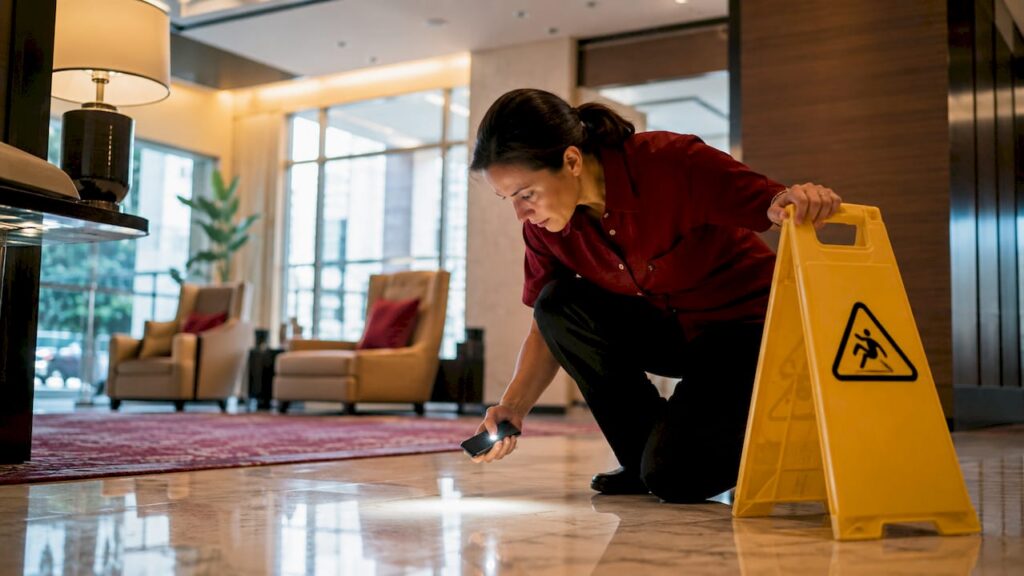
Slips and falls are the top injury cause in hotels, and most are preventable with consistent daily habits. Housekeeping and kitchen staff face the highest risk, particularly in areas with wet floors, uneven surfaces, and cluttered walkways.
The most effective prevention measures include:
- Clean up spills immediately and place wet floor signs before you start mopping, not after.
- Use nonslip mats at entrances, in kitchens, and near ice machines or beverage stations.
- Keep walkways and corridors clear of housekeeping carts, luggage, and loose cables.
- Report damaged flooring, loose carpet edges, or broken tiles to maintenance the same day you spot them.
- Check that lighting in stairwells, service corridors, and parking areas is adequate on every shift.
Good lighting is not a luxury. Poor visibility in service areas causes staff to misjudge steps and miss wet patches entirely.
Pro Tip: Wear footwear with slip-resistant soles rated for wet surfaces. Your employer may supply them, but if not, it is worth purchasing a pair yourself. The cost is far lower than a lost-time injury.
2. What are the critical protocols for handling chemicals and cleaning supplies?
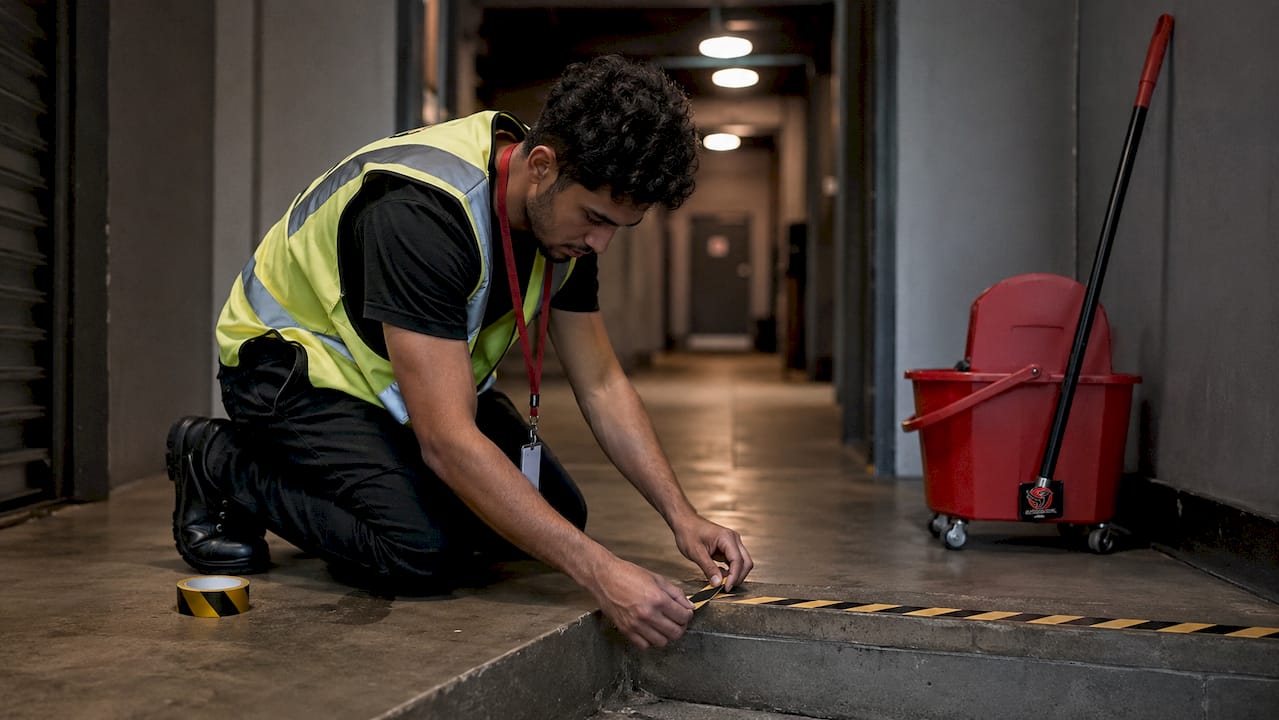
Chemical exposure is a serious and underreported risk in hotel environments. Every cleaning product you use carries specific hazards, and the Safety Data Sheet (SDS) for each chemical tells you exactly how to handle, store, and respond to accidental exposure.
Safe chemical handling requires these practices:
- Read the SDS before using any product for the first time. Know the first aid steps before an incident happens.
- Wear the correct personal protective equipment (PPE): gloves, goggles, and an apron when the SDS requires them.
- Never mix chemicals unless the product instructions explicitly permit it. Mixing bleach and ammonia, for example, produces toxic chloramine gas.
- Label every container clearly. Never transfer chemicals into unmarked bottles or food containers.
- Store chemicals in locked, ventilated areas away from food preparation zones.
- Inspect chemical storage areas regularly for leaks, damaged containers, or expired products.
The hierarchy of controls places PPE at the bottom of the priority list for good reason. Engineering solutions, such as better ventilation or pre-diluted products, reduce exposure more reliably than gloves alone. Advocate for those solutions with your supervisor.
3. Which ergonomic practices reduce injury for hotel staff?
Musculoskeletal injuries from lifting, pushing, and repetitive tasks are among the most common long-term health problems for hotel employees. The good news is that most are preventable with the right technique and the right tools.
Follow these steps to protect your body:
- Use a trolley or cart for heavy loads. Pushing is always safer than carrying.
- When lifting manually, bend at the knees, keep the load close to your body, and avoid twisting your spine.
- Ask a colleague for help with bulky or awkward items. A team lift takes seconds and prevents weeks of recovery.
- Use long-handled tools such as mops, dusters, and squeegees to reduce bending and reaching.
- Rotate tasks throughout your shift to avoid repeating the same motion for hours at a stretch.
- Take short stretching breaks, particularly if your role involves prolonged standing or repetitive arm movements.
Pro Tip: If your workplace does not provide ergonomic tools or lifting aids, raise it formally with your supervisor. The OSHA framework requires employers to address identified hazards, and a written request creates a record.
Fatigue makes poor technique worse. A tired body defaults to shortcuts, and shortcuts cause injuries. Managing your energy across a shift is as much an ergonomic strategy as any piece of equipment.
4. How do wearable safety devices and communication systems protect staff?
Panic buttons and wearable alarms have become standard in many hotels, particularly for staff who work alone in guest rooms or isolated areas. These devices provide a real layer of protection, but their effectiveness depends entirely on how well they are maintained and understood.
Key points every hotel employee should know:
- Safety devices require weekly testing and regular staff training to remain effective. A device that has not been tested may fail when you need it most.
- Panic buttons alert hotel security first, not police directly. Response time depends on how your hotel’s communication system is set up.
- Two-way radios remain one of the most reliable communication tools for staff working in areas with poor mobile coverage.
- Know the activation protocol for your specific device before you need to use it. Fumbling with an unfamiliar button under stress costs critical seconds.
The limitations of panic buttons are well documented. A device is only as useful as the behaviour and awareness behind it. Staff who can read a situation and act before it escalates are always better protected than those who rely solely on technology.
5. Why does fatigue management matter for hotel workplace safety?
Fatigue is now recognised as a core safety risk in hospitality, not just a comfort issue. Tired staff make more errors, react more slowly, and are significantly more likely to be involved in an incident.
Practical fatigue management includes:
- Scheduling shifts with predictable start and end times wherever possible. Unpredictable schedules disrupt sleep and compound fatigue over time.
- Limiting overtime and monitoring cumulative hours worked per week. Chronic overwork is a burnout and safety risk that affects judgement and physical coordination.
- Providing access to Employee Assistance Programmes (EAPs) so staff can get mental health support before stress becomes a crisis.
- Creating a workplace culture where employees feel safe raising concerns about workload without fear of reprisal.
- Building in genuine rest breaks during long shifts, particularly for staff in physically demanding roles.
Mental health and burnout are not separate from physical safety. A staff member who is emotionally exhausted is less alert, less decisive, and more vulnerable to both accidents and threatening situations.
6. What hotel emergency procedures should every employee know?
Emergency preparedness is a non-negotiable part of employee safety guidelines in any hotel. Knowing what to do before an emergency happens is what separates a controlled response from a dangerous one.
Posting clear evacuation maps in visible locations throughout the building is one of the highest-leverage safety measures available. It reduces confusion and satisfies legal standards at the same time. Every staff member should know the location of the nearest exit, fire extinguisher, and first aid kit on their assigned floor.
Beyond physical evacuation, staff need to understand the hotel’s protocols for medical emergencies, aggressive guests, and security threats. These procedures should be covered during onboarding and reviewed at least annually. Knowing comprehensive safety protocols for hospitality environments gives staff the confidence to act rather than freeze.
Pro Tip: Walk your assigned area at the start of each shift and note any blocked exits, missing signage, or broken equipment. A two-minute safety walk costs nothing and can prevent a serious incident.
Key takeaways
The most effective approach to hotel employee safety combines physical hazard prevention, proper use of safety devices, and a workplace culture where every staff member feels responsible for reporting risks.
| Point | Details |
|---|---|
| Slips and falls are the top risk | Clean spills immediately, use nonslip mats, and maintain clear walkways on every shift. |
| Chemical safety starts with the SDS | Read the Safety Data Sheet before using any product and never mix incompatible chemicals. |
| Ergonomics prevents long-term injury | Use trolleys, practise correct lifting technique, and rotate tasks to avoid repetitive strain. |
| Safety devices need testing and training | Panic buttons only work when tested weekly and when staff know the activation protocol. |
| Fatigue is a safety issue, not just a comfort issue | Predictable shifts, limited overtime, and access to EAPs reduce incident risk significantly. |
What I have learned about building a real safety culture in hotels
Hotel safety programmes often look good on paper and fall apart in practice. I have seen workplaces with laminated checklists on every wall and staff who have never once been asked what hazards they actually encounter on their shifts.
The single biggest differentiator in effective safety programmes is active employee involvement. Not consultation as a formality, but genuine dialogue where staff feel safe raising concerns without worrying about how management will react. Anonymous near-miss reporting is one of the most underused tools available. Most injuries are preceded by a series of near-misses that nobody reported because the culture did not support it.
Real-world training matters more than most hotels acknowledge. A staff member who has physically practised what to do in a threatening situation responds differently than one who read about it in an orientation booklet. The body needs to rehearse the response, not just the mind. That is why practical, scenario-based training, including personal safety and de-escalation skills, belongs in every hotel’s safety programme alongside the standard WHMIS and manual handling modules.
Safety walks done by staff, not just managers, catch hazards that never make it onto formal inspection reports. When you walk your area with safety in mind, you see it differently. That shift in perspective is worth more than any checklist.
— Rob
Building personal safety skills beyond the workplace
Physical hazard prevention covers a lot of ground, but it does not cover everything hotel employees face. Aggressive guests, threatening situations, and personal security risks require a different kind of preparation.
Streetsafeselfdefence offers mobile self-defence training designed for real-world situations, not gym scenarios. The programme covers violence prevention, situational awareness, and practical response skills in as little as five hours, and it comes to your location. For hotel staff who work late shifts, isolated areas, or high-traffic public spaces, that kind of preparation is a direct extension of the workplace safety protocols covered in this guide. You can also explore self-defence rights in Canada to understand the legal framework behind protecting yourself on the job.
FAQ
What is the most common injury among hotel employees?
Slips, trips, and falls are the leading cause of injury in hospitality, most often caused by wet floors and uneven surfaces. Housekeeping and kitchen staff face the highest risk.
How often should panic buttons be tested?
Safety devices should be tested weekly and staff should receive regular training on activation protocols. A device that has not been tested recently cannot be relied upon in an emergency.
What does SDS stand for and why does it matter?
SDS stands for Safety Data Sheet. It contains handling, storage, and first aid information for every chemical product and must be consulted before use.
How can hotel employees report hazards safely?
Anonymous near-miss reporting systems allow staff to flag hazards without fear of reprisal. These reports are one of the most effective tools for preventing injuries before they occur.
Is fatigue really a safety issue in hotels?
Fatigue is a recognised core safety risk in hospitality. Tired staff react more slowly, make more errors, and are more vulnerable to both accidents and threatening situations.
Recommended
- By-Law Officers Deserve Better: Why Reality-Based Training Matters – Street Safe Self Defence
- Why Healthcare Needs Street Safe Self Defence Training Company – Street Safe Self Defence
- Permission to Leave Uncertainty: Why You Don’t Need Proof to Protect Yourself – Street Safe Self Defence
- The Safety App Illusion: Why Your Panic Button Won’t Save You, But Behavioral Intelligence Will – Street Safe Self Defence %
