

Self-defence for teenagers is the practice of equipping youth with situational awareness, confident communication, and practical physical skills to stay safe in real-world situations. The industry term for this approach is “personal safety education,” and it goes well beyond fighting techniques. The most effective programmes combine prevention, de-escalation, and age-appropriate physical training. Streetsafeselfdefence delivers exactly this kind of training, reaching teens directly through mobile and in-person sessions that prioritise realistic safety over competition. Parents who understand what good teen self-defence looks like are far better placed to choose the right programme and reinforce those skills at home.
1. What makes self-defense for teenagers effective?
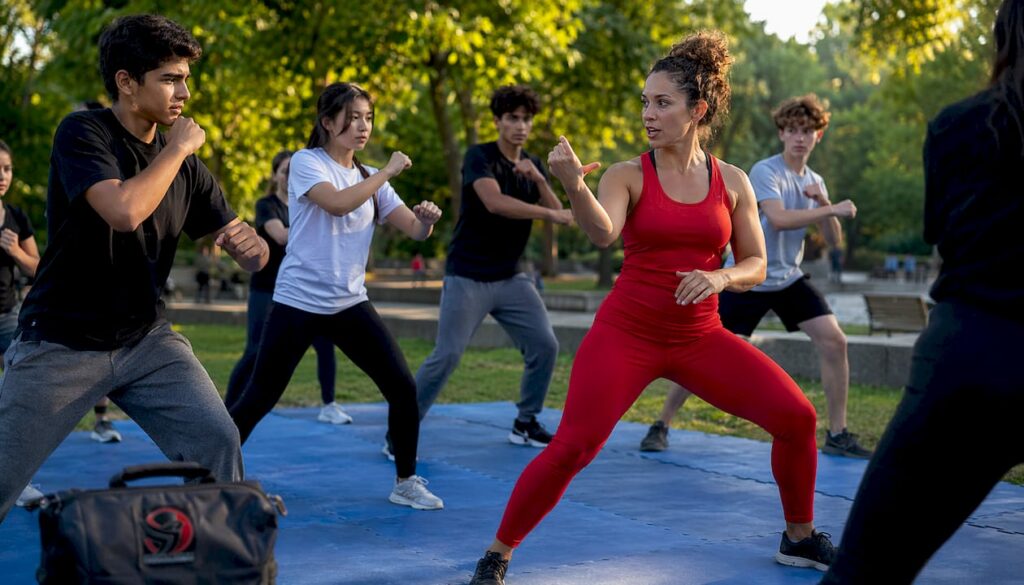
Effective self-defence training for teens is built on three pillars: awareness, communication, and physical skill. The order matters. A teen who spots a threat early and exits calmly is safer than one who can throw a punch but never saw the danger coming. Structured self-defence courses for teenagers typically run about 8 weeks, with weekly 60-minute sessions focused on practical, non-competitive skills. That structure gives teens enough repetition to build real habits, not just surface knowledge.
The best programmes also include de-escalation techniques and boundary-setting communication. Physical training alone creates a false sense of security. Age-appropriate framing matters too. Instructors should be honest that a few classes do not make a teen untouchable, and that the most useful skill is reading a room, keeping distance, and leaving early. That honesty builds genuine confidence rather than reckless bravado.
Pro Tip: When evaluating self-defence classes for teens, ask the instructor directly: “What do you tell students about their limits?” A good instructor will give an honest, grounded answer rather than a sales pitch.
2. Situational awareness: the first line of defence
Situational awareness is the ability to read an environment and identify potential threats before they escalate. Experts from the Lynwood Charlton Centre emphasise that teens must learn to trust their instincts and identify uncomfortable situations early, rather than waiting until they are already in danger. This skill is teachable, and it is the single most protective habit a teenager can develop.
Practical awareness training teaches teens to notice exits when they enter a space, identify people whose behaviour feels off, and avoid distractions like headphones in unfamiliar areas. These habits do not require physical strength or size. They work for every teen, regardless of fitness level or age. Streetsafeselfdefence builds situational awareness skills directly into its teen programmes, treating prevention as the core skill rather than an afterthought.
3. Assertive communication and confident body language
Confident body language sends a clear signal to potential aggressors: this person is aware and not an easy target. Teens who walk with their head up, make eye contact, and speak clearly are less likely to be targeted. This is not about aggression. It is about projecting calm self-assurance.
Assertive communication means stating boundaries clearly and without apology. Phrases like “No, I’m not going to do that” or “Leave me alone” said in a firm, even tone are far more effective than hesitant or pleading responses. Role-playing these scenarios at home reinforces what teens learn in class. Parents can practise with their teens by acting out common pressure situations, from peer pressure to stranger interactions, so the responses become automatic.
4. Physical techniques suited to teenagers
The most practical physical techniques for teens favour control over striking. Brazilian Jiu-Jitsu (BJJ) is particularly well-suited because it is grappling-based with no striking, and a smaller teen can control a larger person with good technique. That makes it realistic for teens who are not yet fully grown or who are not naturally athletic. Boxing and kickboxing suit teens who want a cardio-intensive outlet, while wrestling fits those who prefer competitive intensity.
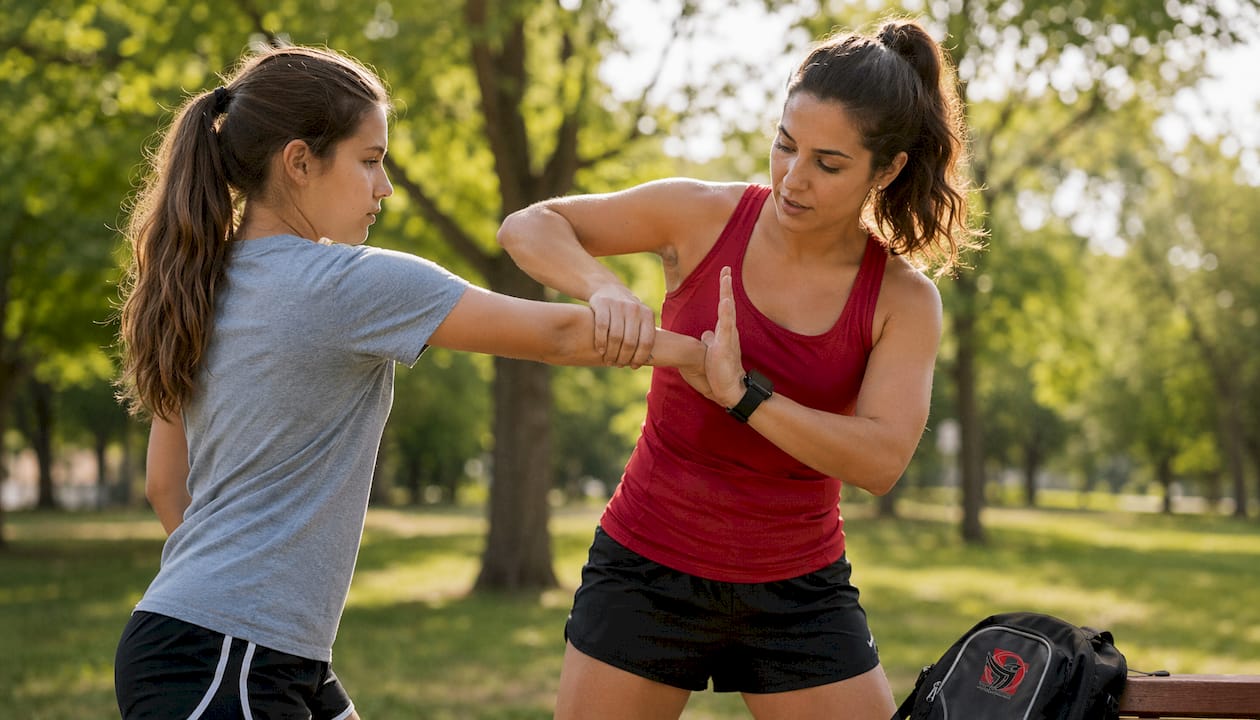
Good teen self-defence classes also teach basic escape techniques: breaking a wrist grab, creating distance from a bear hug, and falling safely. These are high-value skills that do not require size or strength. Teen girls train alongside everyone in grappling-based programmes, and technique consistently outperforms size when the training is sound. Smaller teens are paired appropriately and never put at physical risk.
Pro Tip: If your teen is hesitant about physical contact in training, BJJ is the best starting point. The controlled environment and technique-over-strength model builds confidence quickly without the intimidation of striking arts.
5. How to defend yourself from a bully: a practical approach
Responding to bullying requires a calm, three-part strategy rather than a reactive one. Experts recommend staying calm and assertive to avoid fuelling the bully, removing yourself from the environment as quickly as possible, and reporting the behaviour to a trusted adult with specific documentation. Each step matters. Reacting with anger or fear gives the bully exactly what they are looking for.
Documentation is the step most teens skip. Encourage your teen to write down dates, times, locations, and what was said or done. Screenshots of online harassment belong in that record too. This information is critical when working with schools or other authorities. The Streetsafeselfdefence high school programme addresses bullying response directly, teaching teens that walking away is a high-level tactical decision, not a sign of weakness.
6. De-escalation and exit strategies
De-escalation is the skill of reducing tension in a confrontation before it becomes physical. It is one of the most underrated tools in teen self-defence. Teens learn to use calm, non-threatening language, avoid direct challenges, and look for a way out of the situation. The goal is always to leave safely, not to win an argument.
Exit strategies are equally concrete. Teens should identify the nearest exit when they arrive somewhere new, keep their phone charged and accessible, and have a pre-arranged signal with a parent or friend if they need help. These are not dramatic measures. They are practical habits that reduce risk in everyday situations. Teaching your teen to plan exits is one of the most grounded personal safety tips for youth that any parent can offer.
7. Building confidence and self-esteem through training
Self-defence training builds confidence through small, measurable wins rather than competition. A teen who successfully escapes a wrist grab in class, or who holds their ground in a role-play scenario, experiences a genuine sense of capability. That feeling transfers to other areas of life, including school, social situations, and managing anxiety. Confidence from self-defence training grows with realistic instruction that emphasises prevention and recovery, not just physical prowess.
Parents should watch for these signs of growing confidence in their teens:
- Improved posture and eye contact in daily interactions
- Willingness to set verbal boundaries with peers
- Reduced anxiety about walking alone or using public transit
- Greater comfort discussing safety concerns with trusted adults
- Calmer responses to conflict rather than avoidance or escalation
Honest instruction is the foundation of this growth. Instructors who overstate what a teen can do after a few classes undermine the very confidence they are trying to build.
8. The parental role in reinforcing teen safety
Parents are the most consistent safety resource a teenager has. The first and most important thing a parent can do is listen without judgement when their teen reports a problem. Child development experts are clear: parents should separate the bullying behaviour from the child’s identity, believe the teen without question, and collaborate on a strategy rather than trying to fix the problem alone. That collaborative approach restores the teen’s sense of agency.
Practical steps parents can take at home include:
- Role-playing assertive communication scenarios weekly
- Reviewing and updating a family safety plan each term
- Teaching teens to document incidents with dates and details
- Building a network of trusted adults the teen can contact
- Staying engaged with the school’s anti-bullying policies and reporting processes
The goal is not to make your teen fearful. It is to make them prepared. A teen who knows their parent takes safety seriously, and who has practised responses to real scenarios, is far more resilient than one who has only been told to “be careful.”
Pro Tip: Set aside 10 minutes once a week for a low-key safety check-in with your teen. Keep it conversational, not interrogative. Ask what felt uncomfortable that week and what they did about it. That habit builds trust and keeps communication open.
9. Choosing the right self-defense classes for teens
Not all self-defence classes for teens are equal. The best programmes are structured, trauma-informed, and led by instructors with experience working with young people. Look for courses that include situational awareness, de-escalation, and physical techniques in the same curriculum. A programme that only teaches striking, or only teaches awareness, is incomplete.
Ask these questions before enrolling your teen:
- Does the programme address bullying and peer pressure specifically?
- Are instructors trained in trauma-informed teaching methods?
- Is the physical training age-appropriate and inclusive of all body types?
- Does the course include parental guidance or family involvement?
- Is the curriculum based on real-world scenarios rather than sport competition?
Streetsafeselfdefence offers mobile self-defence training that comes directly to schools and community groups, removing the barrier of travel and making quality instruction accessible. The curriculum covers violence prevention, awareness, and practical skills in a format designed for teens of all fitness levels.
Key takeaways
Effective self-defence for teenagers prioritises situational awareness and de-escalation over physical fighting, with structured programmes and parental involvement producing the strongest safety outcomes.
| Point | Details |
|---|---|
| Awareness comes first | Teaching teens to read a room and exit early is more protective than any physical technique. |
| Honest instruction matters | Programmes that avoid overpromising build genuine confidence and realistic safety habits. |
| Bullying needs a three-part response | Stay calm, remove yourself from the situation, and document the incident for trusted adults. |
| Parents reinforce training | Listening without judgement and role-playing scenarios at home multiplies the effect of formal classes. |
| Structure drives results | Courses running approximately 8 weeks with weekly sessions give teens enough repetition to build lasting habits. |
Why I think most parents are asking the wrong question about teen self-defence
Most parents come to me asking, “What fighting technique should my teen learn?” That is the wrong starting point. After years of working with teenagers and their families, I have found that the teens who stay safest are the ones who never needed to fight. They spotted the problem early, changed their route, or said something clear and confident that stopped the situation before it started.
Physical skills matter. I am not dismissing them. But a teenager who has drilled a palm strike a hundred times and never practised reading a room is not actually safer. They are just more confident in the wrong direction. The understanding of self-defence in Canada makes this clear: physical force is a last resort, not a first response.
What I have also seen is that parental involvement changes everything. Teens whose parents practise scenarios with them, who ask real questions about their week, and who treat safety as an ongoing conversation rather than a one-time lecture, develop a kind of awareness that no single class can teach alone. That is the combination worth investing in.
— Rob
Streetsafeselfdefence teen training: practical safety that comes to you
Streetsafeselfdefence delivers reality-based personal safety training designed specifically for teenagers, covering situational awareness, de-escalation, and practical physical skills in a single, structured programme. The mobile format means training comes directly to your school, community centre, or group, removing the logistical barriers that keep most families from following through.
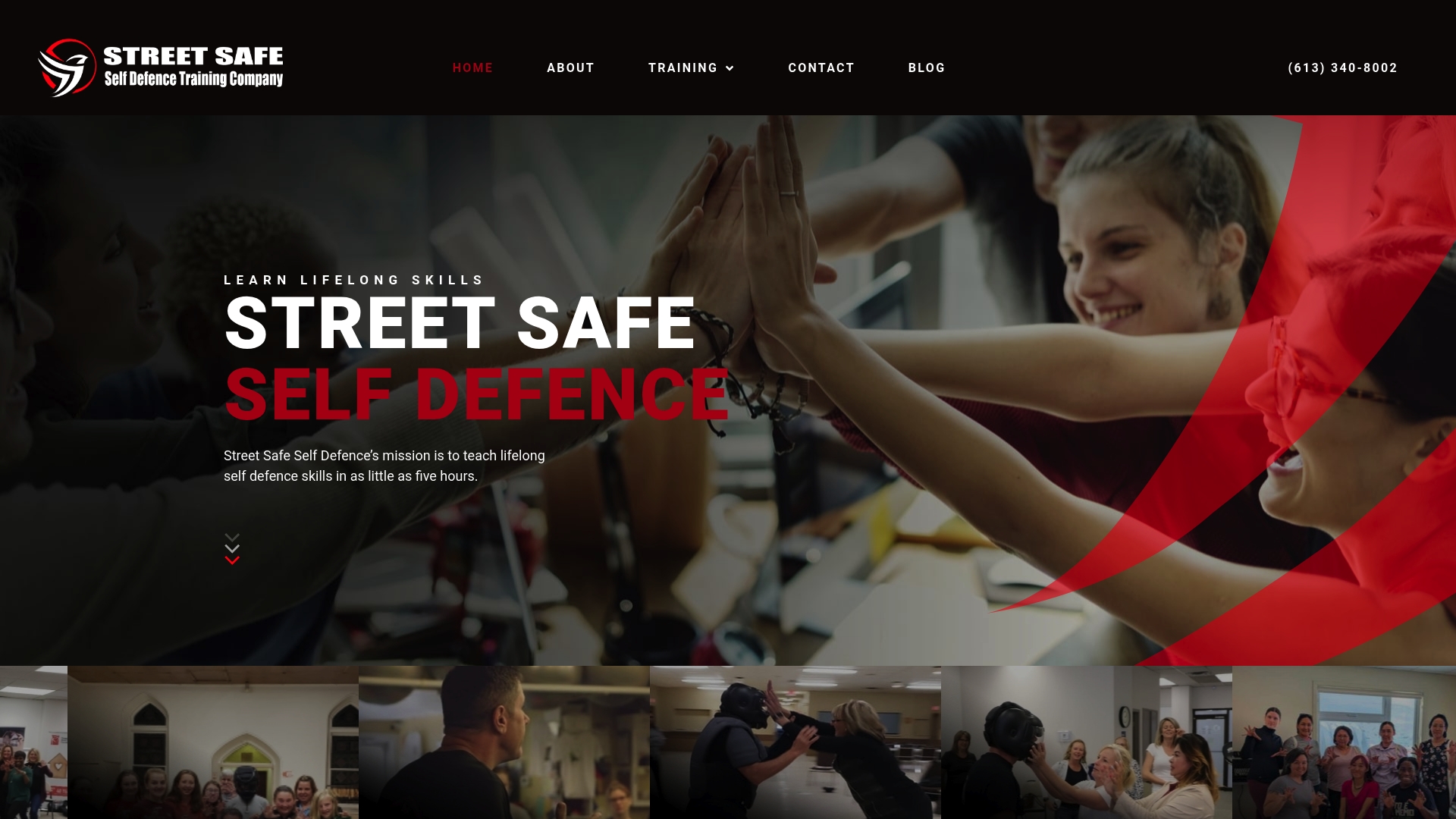
The curriculum is trauma-informed, age-appropriate, and built around real-world scenarios rather than sport competition. Every session is led by experienced instructors who give teens honest, grounded guidance without overpromising what a short course can deliver. Parents receive guidance on reinforcing skills at home. Visit Streetsafeselfdefence to learn more about teen programmes and book a session for your school or group.
FAQ
What is the best self-defence for teenagers?
The best self-defence for teenagers combines situational awareness, assertive communication, and practical physical techniques like Brazilian Jiu-Jitsu. Prevention and early exit are more effective than fighting skills alone.
How long does a teen self-defence course take?
Structured teen self-defence courses typically run about 8 weeks, with one 60-minute session per week focused on practical, non-competitive skills.
How do you defend yourself from a bully as a teen?
Stay calm and assertive, remove yourself from the situation immediately, and report the behaviour to a trusted adult with written documentation of dates, times, and incidents.
Are self-defence classes safe for smaller or less athletic teens?
Grappling-based programmes like BJJ reward technique over size, so smaller teens can control larger partners effectively. Reputable programmes pair participants appropriately and never mismatch students physically.
What role do parents play in teen self-defence?
Parents reinforce training by listening without judgement, role-playing assertive communication at home, and collaborating with their teen on a personal safety plan rather than trying to solve problems for them.
