

You can build genuine self defence skills at home. No gym membership, no sparring partner, and no expensive gear required. What you do need is a consistent approach, the right drills, and a clear understanding of what home practice can realistically deliver.

Effective self defence training at home centres on three things: learning a small set of reliable physical techniques, developing situational awareness, and practising both regularly enough that your responses become automatic. Consistent, focused practice of basic movements for 10–15 minutes, three to five times per week, builds the muscle memory that matters most in a real threat scenario. Home training works best as a foundation, and it pairs well with professional instruction when you are ready to go further.
Key factors for effective home training:
- A clear, safe space of roughly six feet by six feet
- Consistent short sessions rather than occasional long ones
- Focus on foundational moves before attempting complex techniques
- Warm up before every session to prevent injury
- Combine physical drills with mental awareness practice
- Understand the legal context of self defence in Canada
How to train yourself for self defence at home
Set up your space and warm up properly
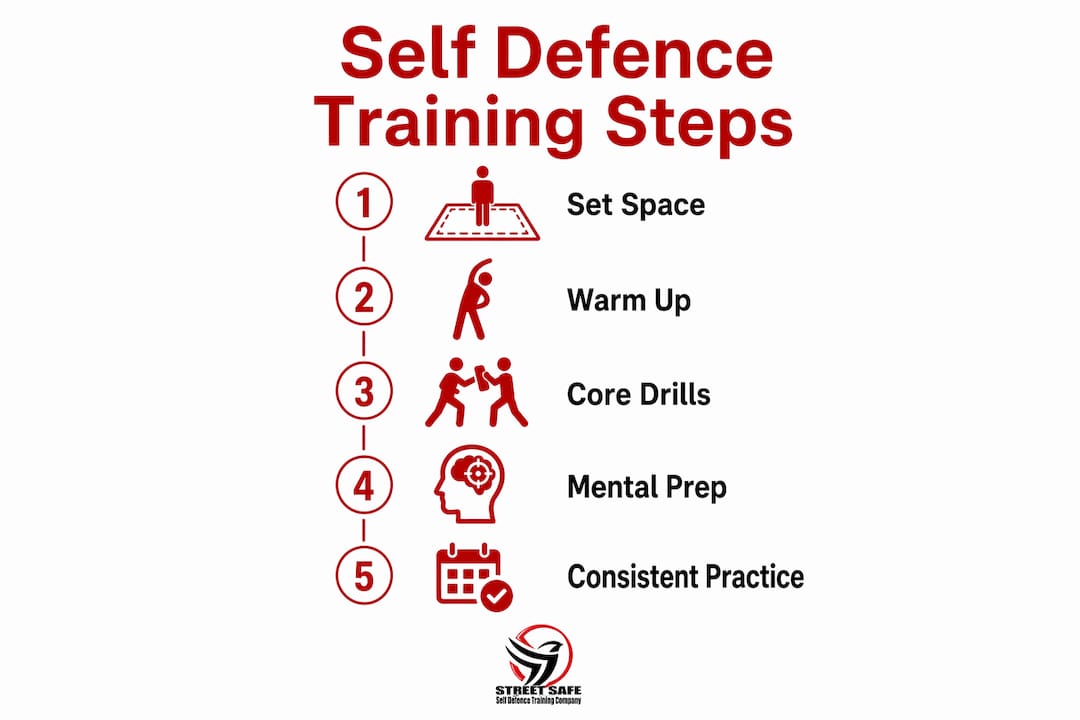
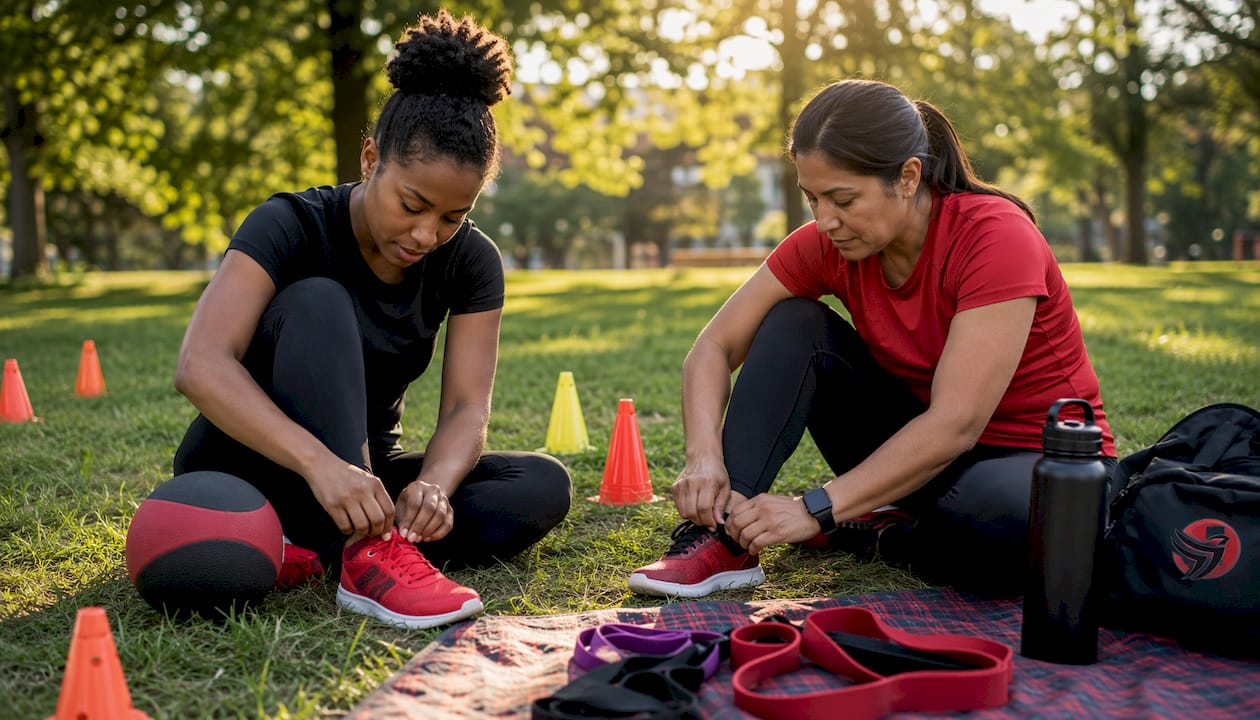
Clear a six-by-six foot area free of furniture. Wear athletic shoes or practise barefoot on a non-slip surface. Before any drill, warm up for 5–10 minutes with light jogging in place, arm circles, hip rotations, and neck rolls. Explosive self defence movements on cold muscles cause injuries, and a pulled muscle ends your training week before it starts.
Core drills to build your home practice
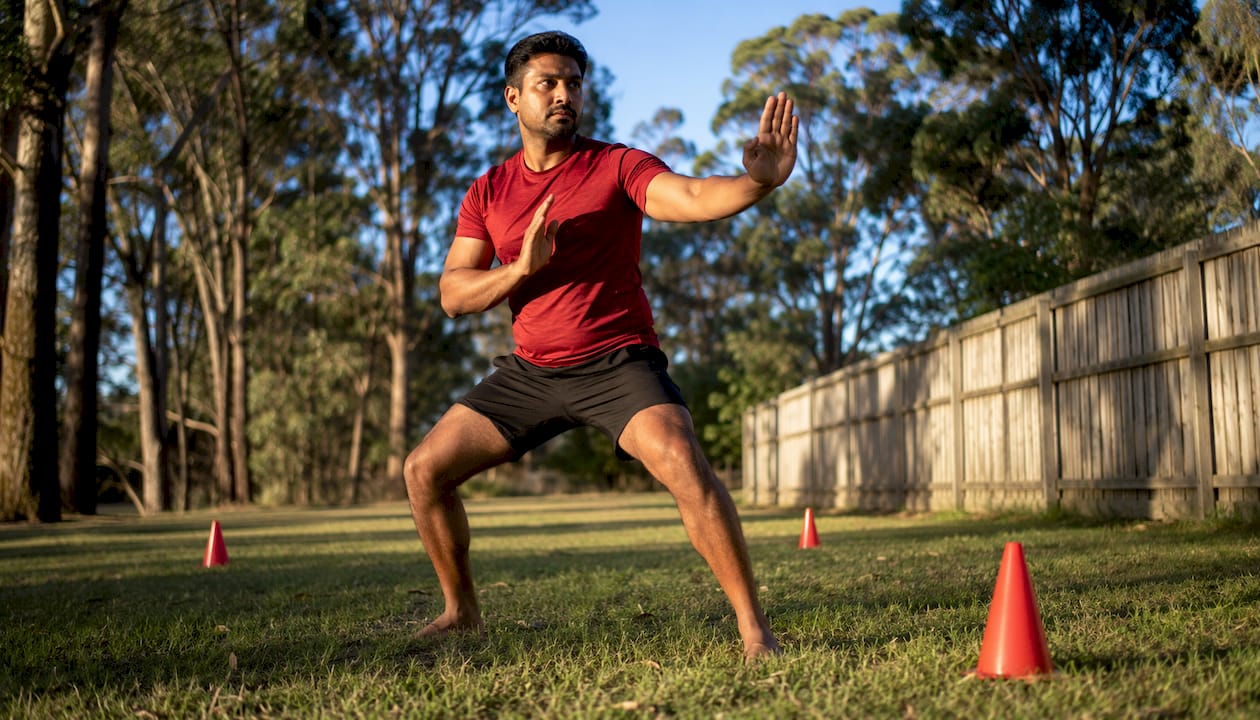
- Fighting stance. Stand with feet shoulder-width apart, non-dominant foot slightly forward, knees soft, hands raised to chin height with palms facing out. Hold this position and move around your space for three minutes. Everything in self defence begins here.
- Palm strikes. From your fighting stance, extend your dominant hand with the wrist bent back and fingers up, striking with the heel of your palm. Rotate your hip into the strike for power. Practice ten slow repetitions to build form, then ten fast ones. Palm strikes are safer for untrained hands than closed-fist punches and just as effective at close range.
- Knee strikes. Step into a clinch position and drive your dominant knee upward in a controlled arc. A household cushion held against a wall gives you impact feedback without a partner.
- Wrist release drill. Grip your own wrist firmly with your opposite hand and practise rotating toward the thumb side to break the hold. Twenty repetitions per wrist builds the reflex quickly.
- Shadow boxing. Move around your space throwing palm strikes, hammer fists, and elbow strikes at the air. Three rounds of three minutes each builds cardio, footwork, and mental visualisation simultaneously.
- Ground recovery. From a seated position on the floor, practise returning to your feet quickly using a side roll and push-up motion. Getting off the ground fast is a practical priority in any real altercation.
- Awareness scan. Stand in a room and consciously note every exit, every object that could serve as a barrier, and every position a threat could come from. This mental drill requires no equipment and trains the most important self defence skill you have.
Pro Tip: Minimal equipment is genuinely all you need. A doorway works for stance practice, and a couch cushion taped to a wall substitutes for a striking target. Do not wait until you have gear to start.
What self defence principles should guide your home practice?
Pre-contact skills come first
Most beginners focus immediately on striking techniques. The more effective starting point is pre-contact skills: situational awareness, recognising behavioural cues, and maintaining a safe stance before any physical contact occurs. Recognising a threat early gives you options. Waiting until contact is made removes most of them.
The safe stance is your default posture
The safe stance is not just a fighting position. It signals calm confidence, keeps your hands available for defence, and protects your centreline. Practise holding it naturally so it becomes your default body language in uncertain situations, not something you have to consciously remember.
Mental preparedness is a trainable skill
Calmness under pressure does not come naturally to most people. It comes from rehearsal. Practising drills under mild time pressure, or running through scenarios mentally, conditions your nervous system to respond rather than freeze. This is why scenario practice matters as much as technique repetition.
Know the limits of solo practice
Home training builds a solid foundation, but it has real limits. You cannot replicate the unpredictability of a resisting partner, and feedback on your form is harder to get without a mirror or a coach. Solo practice is where you build the movements. Professional instruction is where you test them. For foundational self-defence techniques, starting with expert guidance accelerates everything you then practise at home.
Pro Tip: Focus on three to four techniques you can perform reliably rather than ten you perform poorly. Depth beats breadth at every stage of beginner training.
How do you stay consistent with home self defence training?
Consistency is the single biggest predictor of skill development, and it is also the hardest part of solo training. Short, frequent sessions outperform long, sporadic ones every time. A professional instruction approach to skill-building confirms this across disciplines: regular repetition at moderate intensity outperforms occasional high-intensity sessions for retaining technique under stress.
Practical strategies that work:
- Schedule sessions at the same time each day, even if only for 15 minutes
- Track your sessions in a notebook or phone app so progress feels visible
- Rotate through different drills each week to keep practice from feeling repetitive
- Set a specific goal for each session (“ten clean palm strikes per side”) rather than a vague one (“practise striking”)
- Celebrate small milestones, like completing a full week of sessions or noticing improved form
The most common reason people stop training at home is boredom from doing the same drill the same way. Varying your drills and occasionally revisiting what a structured self defence lesson covers keeps the practice purposeful and connected to real goals.
Streetsafeselfdefence: expert mobile training for Canadians
Home practice builds a foundation. Streetsafeselfdefence builds on it with reality-based, trauma-informed instruction that meets you where you are, literally. Their mobile training service brings professional self defence education directly to individuals, schools, corporate teams, real estate professionals, and community groups across Canada.
The programme covers practical, reality-based violence prevention skills that work regardless of age or fitness level. Instructors hold professional credentials and use a trauma-informed approach, which means training is designed to build confidence without re-traumatising participants. Courses can be completed in as little as five hours, making professional instruction accessible even for people with demanding schedules.
Streetsafeselfdefence serves a wide range of groups, from high school students to Indigenous communities to law enforcement professionals. That breadth reflects a core belief: personal safety education belongs to everyone, not just those with martial arts backgrounds or physical advantages.
Ready to move beyond solo practice? Explore mobile training options with Streetsafeselfdefence and get professional instruction delivered directly to your community.
Key takeaways
Effective self defence training at home requires consistent short sessions, foundational technique practice, and situational awareness built in parallel with physical drills.
| Point | Details |
|---|---|
| Consistency beats intensity | Practise 10–15 minutes, three to five times per week to build reliable muscle memory. |
| Start with pre-contact skills | Situational awareness and safe stance reduce risk before any physical contact occurs. |
| Minimal equipment is enough | A doorway, a cushion, and open floor space are sufficient for effective home drills. |
| Scenario practice matters | Combining technique drills with decision-making scenarios builds real-world readiness. |
| Professional instruction accelerates progress | Streetsafeselfdefence offers mobile, trauma-informed training accessible to all ages and fitness levels across Canada. |
