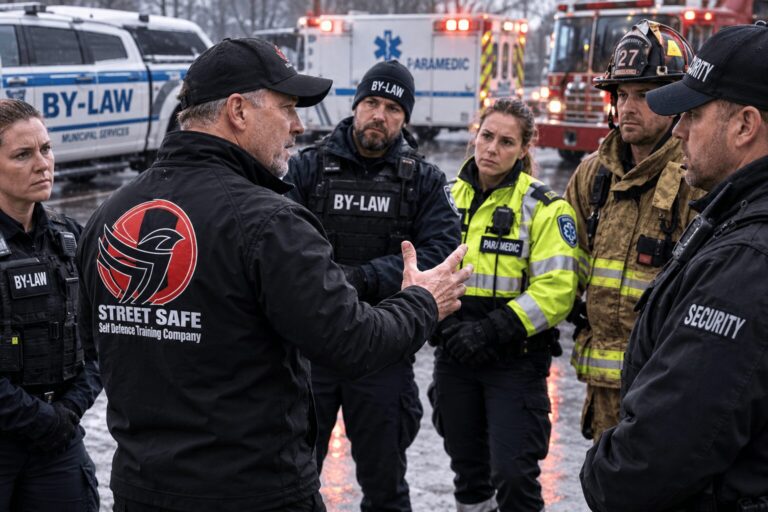
Learn what employees should do when verbal de-escalation no longer works, including disengagement, safe escape, emergency communication, and coordinated response.
Effective de-escalation begins with recognizing warning signs. Learn how early threat identification helps teams respond before behaviour becomes dangerous.
Learn how the first moments of a tense encounter shape what happens next—and how awareness, communication, positioning, controlled movement, and calm decisions can reduce risk and prevent escalation.
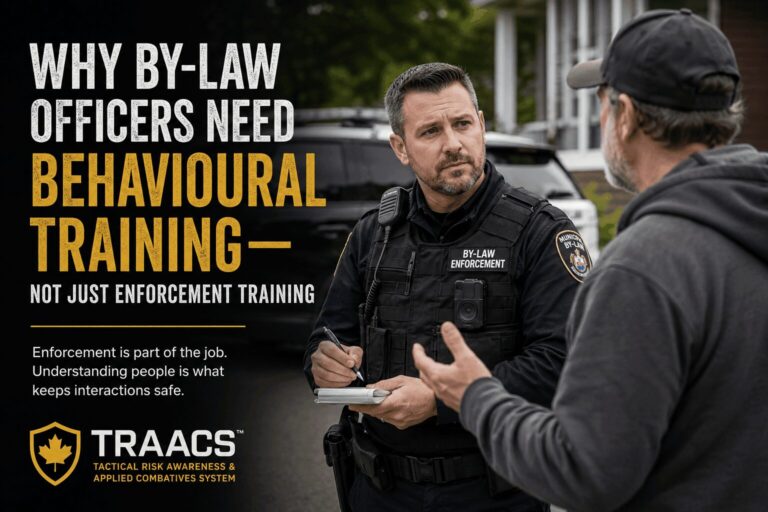
Explore why Canadian municipalities are prioritizing workplace violence prevention, employee preparedness, early risk recognition, and practical response training.
Real self-defence is not about winning. It is about recognizing danger, making effective decisions, creating an opportunity to escape, and returning home safely.
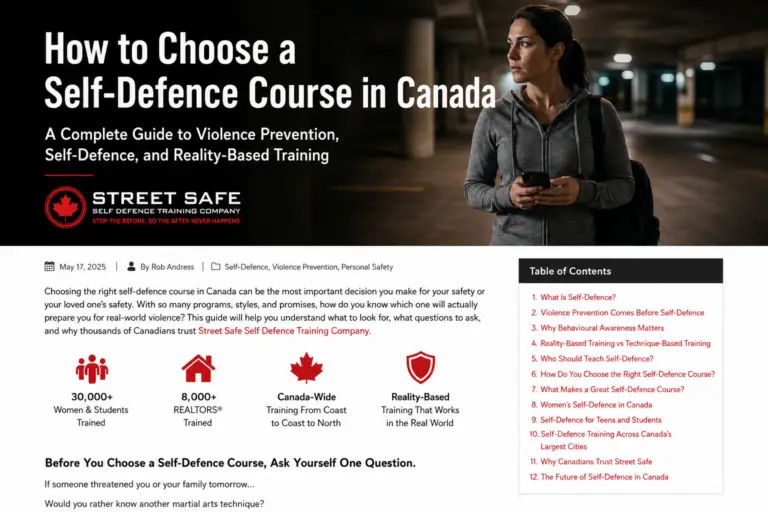
Learn what to evaluate in a Canadian self-defence course, including instructor qualifications, realistic training methods, safety standards, course content, and practical skills you can use.
Explore the experience, qualifications, ethical standards, and trauma-informed teaching skills instructors need to provide responsible, realistic, and effective self-defence training.