

Hotel safety is defined as the set of proactive measures travellers take to protect themselves from theft, intrusion, and harm while staying in commercial lodging. The most effective hotel safety tips combine strategic room selection, a thorough arrival inspection, portable security devices, and consistent behavioural awareness throughout your stay. Retired FBI agents and travel security professionals agree that safety begins before you even reach the front desk. Combining attentive travellers with strong hotel operations produces the best protective environment. This guide gives you every practical tool you need.
1. How to choose a hotel and room for maximum safety
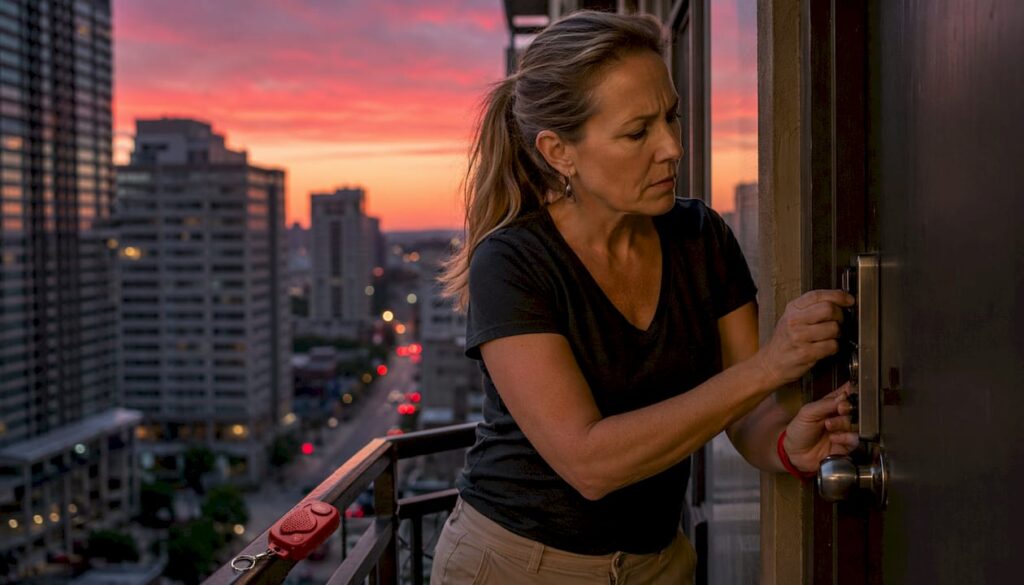
Room selection is one of the most underrated hotel safety tips, and most travellers skip it entirely. The floor you sleep on and the room’s position in the building directly affect your risk level.
Rooms on floors 3–6 offer the best balance between break-in resistance and fire escape accessibility. Ground floor rooms are the easiest to enter from outside. Rooms above the sixth floor are often beyond the reach of fire department ladders.
- Choose hotels with controlled lobby access, visible CCTV cameras, and well-lit parking areas.
- Avoid rooms directly beside elevators or stairwells. Both attract foot traffic and reduce your privacy.
- Request a room away from the main entrance. Corner rooms with fewer shared walls are preferable.
- Request two room keys at check-in. This signals to anyone watching that you are not travelling alone, and gives you a backup if one key is misplaced.
Pro Tip: Ask the front desk to write your room number down rather than say it aloud. This one habit protects your location from anyone standing nearby.
2. Essential safety checks to do the moment you arrive
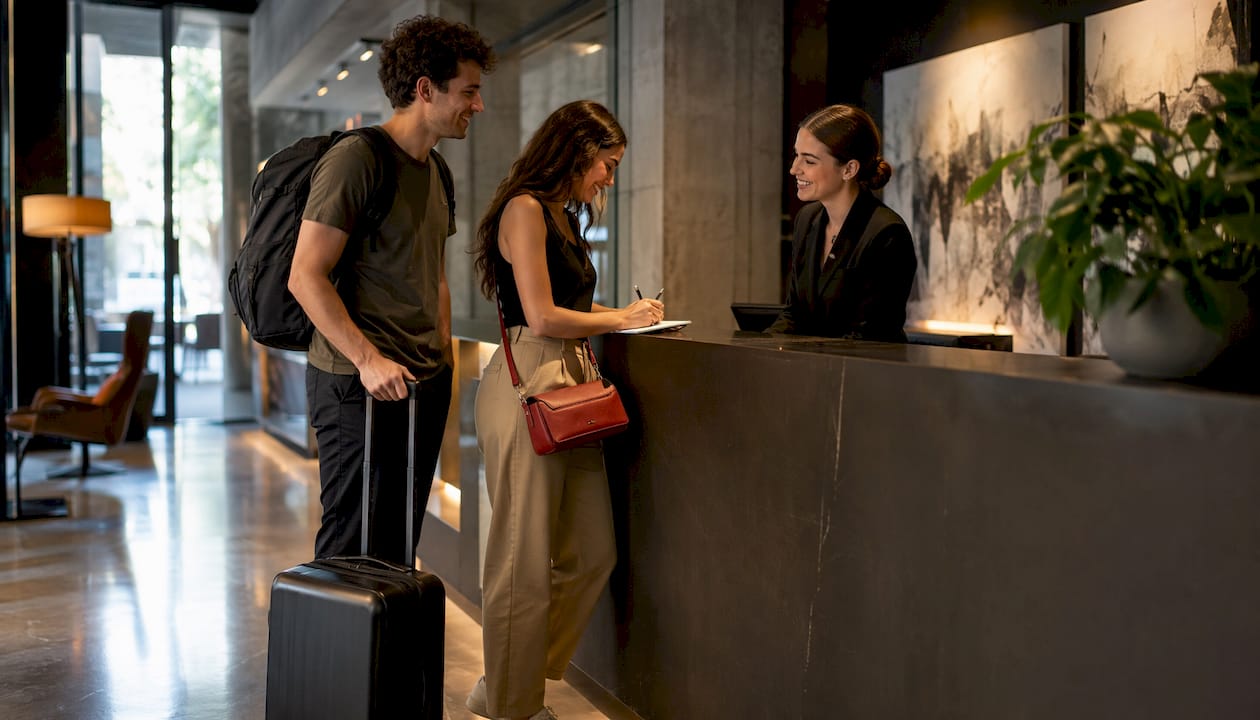
Most travellers drop their bags and relax. The smarter move is a two-minute room inspection before you do anything else.
Start by checking behind curtains, under the bed, and inside the closet. These are the three places a person could conceal themselves. Check that the deadbolt, chain lock, and window latches all function properly. A lock that sticks or a window that does not close fully is a security gap worth reporting immediately.
- Scan for hidden cameras. Use your phone’s flashlight to look for lens reflections inside smoke detectors, alarm clocks, and air vents. A phone flashlight can reveal hidden lens reflections inside common room electronics.
- Locate the evacuation diagram. It is posted on the back of your door. Identify two exits and count the doors to the nearest stairwell. In a smoke-filled hallway, you navigate by touch and count, not by sight.
- Test the room phone. Confirm it connects to the front desk. In an emergency, your mobile may be out of reach or out of battery.
- Check the peephole. Some peepholes can be reversed from the outside. If the view looks distorted or blocked, report it.
- Inspect the bedding. Look along the mattress seams for signs of bed bugs. Small dark spots or shed skins are the clearest indicators.
| Check | What to look for | Action if problem found |
|---|---|---|
| Door locks | Deadbolt, chain, and handle lock all engage | Request a room change |
| Window latches | Latches close and lock fully | Report to front desk |
| Peephole | Clear outward view, no blockage | Request room change |
| Hidden cameras | Lens reflections in electronics | Contact hotel management and local authorities |
| Evacuation route | Two exits identified, door count memorised | No action needed once confirmed |
Pro Tip: Count the doors between your room and the nearest stairwell exit the first time you walk the hallway. You will be grateful for that habit if you ever need to move fast in the dark.
3. Personal security devices worth carrying
Portable security tools give you a meaningful layer of protection that hotel locks alone cannot provide. The best part is that most of them cost very little and fit inside a carry-on bag.
Portable door alarms cost under $15 and emit a loud alert if someone opens the door while you are sleeping. That price point makes them one of the highest-value travel purchases available. Door wedges and portable door locks serve a similar purpose by physically preventing the door from opening, even if someone has a key card.
- Door alarm or wedge. Place it at the base of the door before bed. Door wedges and portable door locks add a physical barrier beyond the built-in hotel lock.
- RF detector. A radio frequency detector scans for wireless signals from hidden cameras or listening devices. Entry-level models are widely available online.
- Curtain clips. Standard hotel blackout curtains often leave a gap. A small binder clip or curtain pin closes that gap and prevents anyone outside from seeing in.
- Non-lethal personal safety options. Travellers who want a broader personal security toolkit can review non-lethal carry options suited to different travel contexts.
Understanding self-defence principles in Canada helps you choose the right tools for your situation and know how to use them legally.
4. Behavioural habits that protect your privacy and safety
Physical tools only work when your behaviour supports them. The most consistent hotel safety advice from security professionals focuses on what you do, not just what you carry.
Retired FBI agents recommend parking at the front of the hotel where lighting and camera coverage are strongest, and being discreet at the front desk. Never announce your room number out loud. If the desk agent says it aloud, politely ask them to reissue your key card without repeating the number.
“Safety begins well before check-in. Your behaviour in the lobby, the parking lot, and the elevator shapes your risk level just as much as the lock on your door.”
- Use the main entrance only. Side entrances and back doors reduce visibility and increase your exposure.
- Do not press your elevator floor button until the doors close. Wait for others to press their floors first. This prevents strangers from knowing which floor you are on.
- Keep the “Do Not Disturb” sign on your door during the day. It signals occupancy and discourages opportunistic entry.
- Engage every lock available: deadbolt, chain, and door alarm before sleeping.
- Limit posting your location on social media until after you have checked out. Real-time location sharing tells potential thieves exactly where you are and where you are not.
- Trust your instincts. If something about a room or a person feels wrong, report it to the front desk and request a change. Behavioural intelligence is a more reliable safety tool than any app.
Key takeaways
The most effective approach to hotel safety combines strategic room selection on floors 3–6, a thorough arrival inspection, affordable portable security devices, and consistent privacy-protecting behaviour throughout your stay.
| Point | Details |
|---|---|
| Choose your floor carefully | Request rooms on floors 3–6 for the best balance of security and fire escape access. |
| Inspect the room on arrival | Check locks, windows, hidden cameras, and evacuation routes before unpacking. |
| Carry portable security tools | A door alarm under $15 and a door wedge add meaningful protection beyond hotel locks. |
| Protect your room number | Ask the front desk to write it down and never announce it in public spaces. |
| Use behavioural awareness | Avoid revealing your floor in the elevator and limit real-time social media location sharing. |
What I’ve learned from years of thinking about traveller safety
Most travellers treat hotel safety as an afterthought. They check in, drop their bags, and assume the lock on the door is enough. That assumption is the gap that creates risk.
The habits that actually protect you are not complicated. They take about five minutes total: a quick room scan, a door alarm at the base of the door, and a mental note of where the stairwell is. The problem is that most people have never been taught to do them. They feel unnecessary until the moment they are not.
What I find most telling is the elevator tip from retired FBI agents. Waiting for others to press their floor first before you press yours is such a small act, but it reflects a larger principle: the less information a stranger has about you, the safer you are. That principle applies to your room number, your travel plans, and your social media posts.
Solo travellers, and particularly women travelling alone, carry a heavier mental load around hotel safety. The tips in this article are not about fear. They are about reducing the cognitive burden by building a short, repeatable routine. Once the habits are automatic, you stop thinking about safety and start enjoying the trip.
— Rob
Practical self-defence training for safer travel
Knowing how to secure a hotel room is one part of personal safety. Knowing how to protect yourself if something goes wrong is the other part.
Streetsafeselfdefence delivers mobile self-defence training that meets you where you are, whether you are preparing for solo travel, a work trip, or everyday life. Courses are reality-based, trauma-informed, and built for all fitness levels. You can build critical personal safety skills in as little as five hours. If you want to know what a first session looks like, the self-defence lesson overview walks you through exactly what to expect.
FAQ
What floors are safest in a hotel?
Floors 3–6 are the safest choice. They are high enough to deter break-ins from outside but low enough to be reached by fire department ladders.
How do I check for hidden cameras in a hotel room?
Use your phone’s flashlight and scan electronics, smoke detectors, and air vents for lens reflections. An RF detector device provides a more thorough sweep for wireless signals.
Are hotels safe for solo women travellers?
Hotels are generally safe when travellers take proactive steps. Requesting a room on floors 3–6, using a door alarm, keeping the “Do Not Disturb” sign displayed, and protecting your room number significantly reduce risk.
Should I use the “Do Not Disturb” sign even during the day?
Yes. Keeping the sign on your door during the day signals that the room is occupied and discourages opportunistic entry by anyone with access to the hallway.
What is the most affordable hotel room security upgrade?
A portable door alarm costing under $15 is the highest-value security addition for most travellers. Paired with a door wedge, it provides a meaningful physical and audible barrier beyond the standard hotel lock.
