

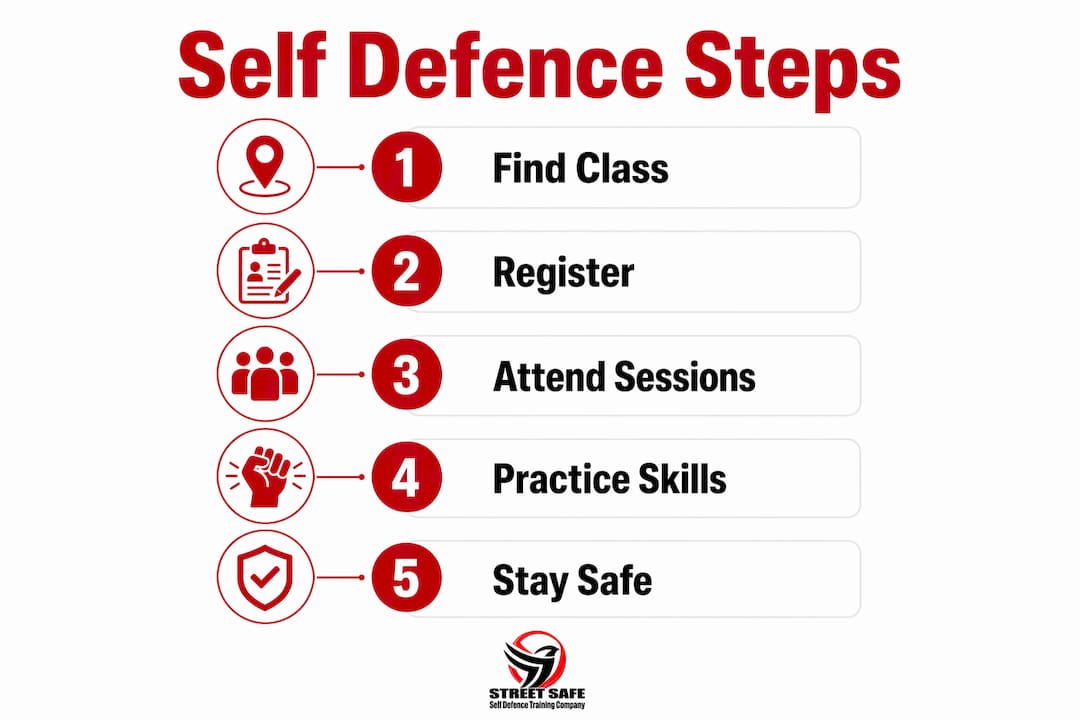
The fastest way to get women-focused self-defence training near you is to book a mobile workshop through Streetsafeselfdefence. Their instructors come directly to your location across Canada, so you don’t need to search for a studio or commute to a class. A five-hour, reality-based session can be arranged for individuals, workplace groups, or community organisations. Contact Streetsafeselfdefence directly through their women’s self-defence page to check availability and reserve your spot.

Before you confirm any booking, run through these three checks:
- Trauma-informed approach: The instructor should be trained to recognise trauma responses and adapt the session accordingly. Reality-based programmes pair verbal boundary-setting and de-escalation with physical techniques, which better matches the everyday threats women actually face.
- Instructor credentials and insurance: Canadian martial arts and recreation instructors are typically expected to hold post-secondary training or equivalent experience, plus valid first aid certification. Ask specifically about liability insurance and whether instructors have completed background checks.
- Small class size or private booking: Programmes that limit group sizes create a safer, more supportive environment for trauma-informed delivery.
One legal point every participant should know: Section 34 of the Criminal Code governs self-defence in Canada. It requires a reasonable perception of threat, a defensive purpose, and actions that are objectively reasonable in the circumstances. This is why quality instructors teach escape-first techniques rather than aggressive counters.
Pro Tip: Ask your provider whether their curriculum is reviewed against Section 34’s reasonableness standard. An instructor who can answer that question clearly is one who has thought carefully about what they teach.
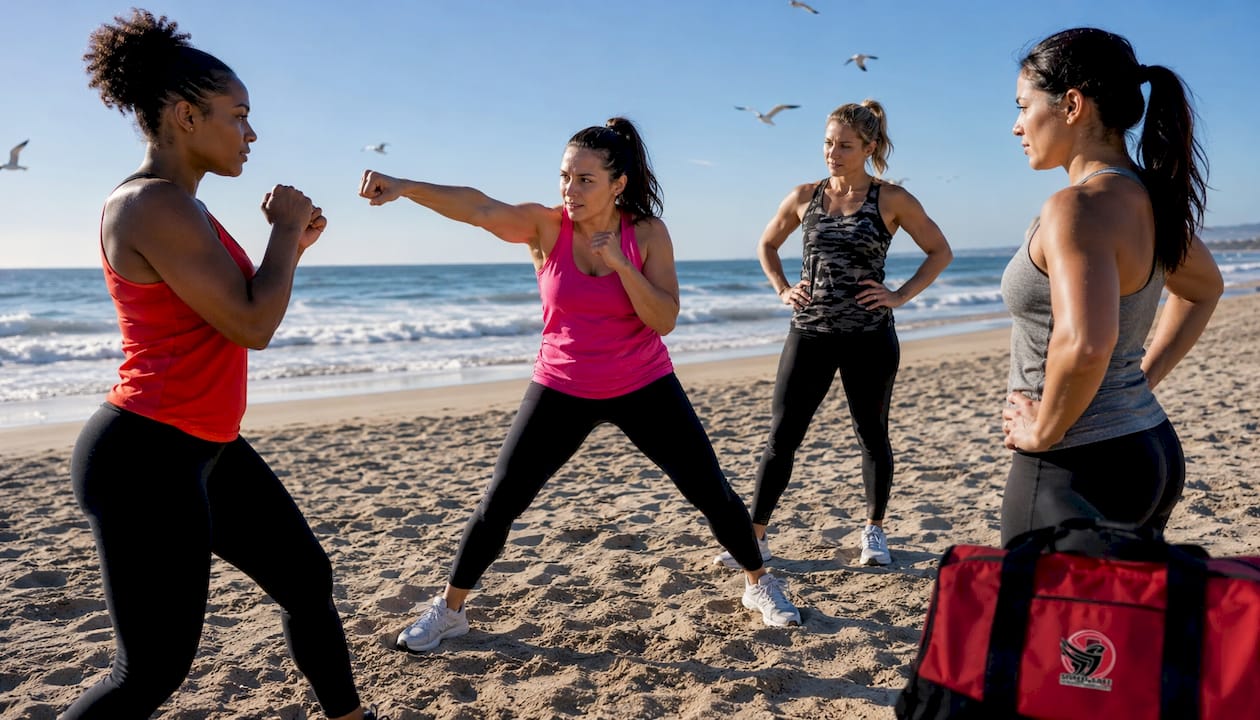
Formats currently available include mobile on-site workshops, the five-hour condensed programme, and evening or weekend group sessions. Most providers require a signed liability waiver before the session begins. No prior fitness level or martial arts experience is needed.
Table of Contents
- What safety measures should you expect at in-person classes?
- Streetsafeselfdefence brings reality-based training to you
- Key takeaways
What safety measures should you expect at in-person classes?
Reputable providers maintain clear physical safety standards regardless of whether public health restrictions are in place. Expect a dedicated warm-up, adequate floor space per participant, and an emergency action plan the instructor can describe on request. Coaching frameworks in Canada include mandatory modules on safe sport and emergency planning, and those standards reasonably apply to self-defence instruction as well.
For COVID-19 and other health protocols, ask the provider directly about their current policy before you book. Responsible operators will confirm ventilation standards, maximum group sizes, and any screening requirements at the time of booking. If a provider cannot answer those questions clearly, that itself is a signal worth noting.
Community-rooted programmes that use small cohorts and somatic practice have shown stronger accessibility and retention outcomes for marginalised groups, including Indigenous women and street-involved populations. If you are booking for a vulnerable group, ask whether the instructor has experience with that community specifically.
Streetsafeselfdefence brings reality-based training to you
Streetsafeselfdefence delivers mobile, trauma-informed self-defence workshops directly to workplaces, community centres, and group settings across Canada. Rather than asking participants to find a studio, the programme comes to them, which removes one of the most common barriers to attendance.
The five-hour workshop covers situational awareness, verbal de-escalation, boundary-setting, and practical escape techniques grounded in violence prevention principles. Pricing varies by group size and format; corporate and community bookings are quoted directly. Sessions are available evenings, weekends, and weekdays. Cancellation policies are confirmed at the time of booking. Participants sign a standard liability waiver before the session starts, and no prior experience is required.
For those who prefer a flexible option, at-home and virtual training is also available. If you are booking for an Indigenous community or a vulnerable population, Streetsafeselfdefence offers culturally specific programming designed with those groups in mind.
Contact Streetsafeselfdefence today to confirm availability, discuss your group’s needs, and get a quote for your session.
This article provides general information about self-defence training and Canadian law. It is not legal or professional advice. Confirm current legal requirements with a qualified professional or consult the Department of Justice directly for your specific situation. For post-incident support, victim support resources are also available.
Key takeaways
Mobile, trauma-informed self-defence training through Streetsafeselfdefence is the most direct route to practical women’s safety skills in Canada, covering legal context, escape-first techniques, and flexible booking.
| Point | Details |
|---|---|
| Book mobile first | Streetsafeselfdefence brings five-hour, reality-based workshops to your location across Canada. |
| Confirm three things before booking | Check for trauma-informed instruction, liability insurance, and small group sizes. |
| Know Section 34 | Canadian law requires a reasonable threat perception, defensive purpose, and objectively reasonable actions. |
| Escape-first curriculum matters | Quality programmes teach verbal de-escalation and boundary-setting alongside physical escape techniques. |
| Streetsafeselfdefence | Offers mobile, culturally adaptable, trauma-informed workshops for women, professionals, and vulnerable groups. |
