

If you want practical safety skills fast, private self-defence lessons are the most direct route. One-on-one instruction means every drill, every scenario, and every technique is built around your body, your schedule, and your actual risk profile. For Canadians looking for a mobile, reality-based option, Streetsafeselfdefence is a strong starting point.
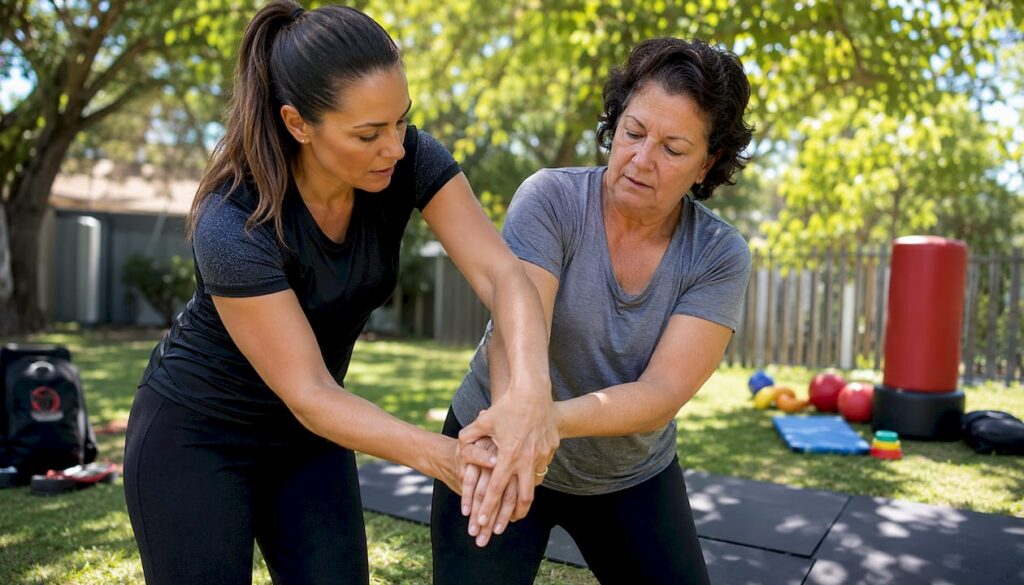
Your immediate options:
- Single intro session — one focused lesson to assess your baseline and learn one core escape technique
- 3–5 session starter package — a short programme covering awareness, avoidance, boundary skills, and physical responses
- Full customised programme — a multi-week plan tailored to your goals, lifestyle, and specific safety concerns
Table of Contents
- What do private self-defence lessons actually teach?
- Who benefits most from one-on-one self-defence coaching?
- How do you vet and choose a private self-defence instructor?
- What does private self-defence training typically cost?
- What happens in your first private self-defence lesson?
- Why reality-based, trauma-informed training matters in Canada
- Key takeaways
- What private lessons taught me about what people actually need
- Streetsafeselfdefence private lessons: how to book
- Useful sources and further reading
What do private self-defence lessons actually teach?
Private lessons focus on situational awareness, boundary-setting, avoidance, and a small set of high-leverage physical escapes, all chosen to match your daily routines and risk level. That specificity is what separates one-on-one coaching from a general group class.
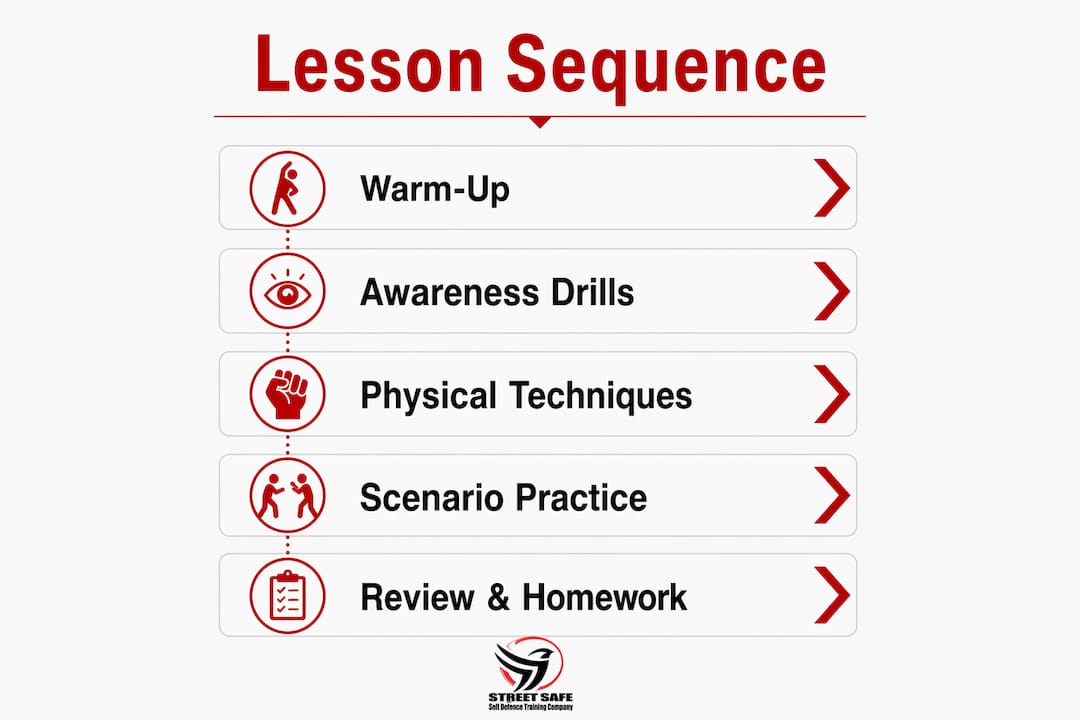
A typical session moves through a clear sequence: a brief warm-up and check-in, awareness and recognition drills, focused skills work, a scenario drill under mild stress, and a debrief. The debrief is where most of the learning gets locked in. Instructors use it to surface what worked, what hesitated, and what to practise before the next session.
Scenario-based stress training matters because fine motor skills degrade under fear. Practising a wrist release in a calm gym is very different from practising it when your heart rate spikes. Private lessons let an instructor increase pressure gradually, at a pace that builds real confidence rather than just muscle memory.
Pro Tip: Practise your one core technique for five minutes every day between sessions, not just before the next class. Frequency beats duration for skill retention. A simple benchmark: you should be able to execute the technique smoothly without thinking about the steps.
Who benefits most from one-on-one self-defence coaching?
Private lessons suit anyone whose needs, schedule, or comfort level make a group class a poor fit. That covers more people than most expect.
| Format | Coverage | Best for | Key trade-off |
|---|---|---|---|
| Mobile / on-site | Instructor comes to you (home, office, park) | Busy professionals, people with mobility limits, those who prefer privacy | Slightly higher cost per session |
| Studio / gym | Fixed location, structured environment | Those who want dedicated training space and equipment | Travel required; fixed schedule |
| Online one-on-one | Video call with live coaching and feedback | Remote areas, travel schedules, follow-up sessions | No physical contact correction |
Groups who consistently get the most from private, personal self-defence training:
- Women seeking trauma-informed, body-specific instruction in a private setting, including women’s self-defence programmes that address real-world threat patterns
- High-school students who need age-appropriate boundary and awareness skills before entering more independent environments
- Real estate agents and hospitality workers who meet strangers alone and need practical risk-assessment habits
- Runners, cyclists, and park-goers whose routines take them through isolated areas at predictable times
- Professionals in security or law enforcement who want tactical scenario work beyond standard training
- Indigenous community members looking for culturally grounded, community-relevant safety education
Building confidence through self-defence also connects naturally to broader assertiveness skills. Assertiveness therapy and self-defence coaching reinforce each other: one addresses the verbal and psychological side of boundary-setting, the other the physical.
How do you vet and choose a private self-defence instructor?
Prioritise instructors with reality-based experience, a trauma-informed approach, clear safety protocols, and the ability to come to you if needed. Those four criteria eliminate most poor fits before you even ask a question.

Qualifications and experience matter, but not in the way a belt rank suggests. Ask specifically whether the instructor has trained in violence prevention frameworks rather than sport martial arts. The self-defence continuum distinguishes between sport techniques and the layered, avoidance-first approach that actually prepares people for real incidents. An instructor who cannot explain that difference clearly is a red flag.
Trauma-informed instruction means the instructor understands that some clients carry prior experiences of violence or harassment. Sessions should begin with a consent and boundaries conversation, and the instructor should never pressure a client through a drill they are not ready for. Ask directly: “How do you handle a client who freezes or becomes distressed during a scenario?”
Practical vetting questions to ask:
- What does a typical first session look like, step by step?
- Do you carry liability insurance for on-site training?
- Can you provide references from clients with a similar profile to mine?
- How do you adjust the curriculum if my goals change?
Red flags to watch for: no clear curriculum outline, evasive answers about scenario training or safety protocols, pressure to commit to a large package before you have had a single session, and instructors who lead with sport credentials rather than real-world application.
Pro Tip: Ask to see a sample session plan in writing before you book. A confident, experienced instructor will have one ready. Vague answers about “we’ll see how it goes” suggest the programme is improvised rather than structured.
What does private self-defence training typically cost?
Private lessons vary widely depending on session length, instructor experience, and whether the service is mobile. Budgeting should focus on those three factors rather than chasing the lowest hourly rate.
| Session length | Recommended frequency | Starter programme (3–5 sessions) |
|---|---|---|
| — | Weekly | Good for beginners building foundational awareness and one or two techniques |
| — | Biweekly | Better for adults with specific risk scenarios or professionals needing scenario depth |
| 5-hour intensive | Single block or split over two days | Suitable for those who want a complete foundation quickly |
Streetsafeselfdefence offers programmes deliverable in as little as five hours, which makes a single intensive block a realistic option for people who cannot commit to a weekly schedule.
A few budgeting principles worth knowing:
- Package discounts are common. A 3–5 session block almost always costs less per session than booking individually.
- Mobile delivery may carry a small travel fee, but it eliminates your commute time and removes the barrier of getting to a gym.
- When to shift formats: once you have solid foundational skills from private sessions, a small-group class is a cost-effective way to practise under social pressure, which is a different and valuable stressor.
Pro Tip: Spend your first three sessions on awareness, avoidance, and one physical escape. Those skills have the highest return in real situations. Save weapon defence and advanced scenarios for later, when your baseline is solid.
What happens in your first private self-defence lesson?
Your first lesson will focus on intake, baseline assessment, situational awareness, and one simple escape technique you can practise on your own. Expect to leave with something concrete, not just theory.
Here is how a well-structured first session typically flows:
- Arrival and intake — the instructor asks about your goals, any physical limitations, and what situations concern you most
- Consent and boundaries — you agree on what physical contact is appropriate during drills, and the instructor explains the session’s safety protocols
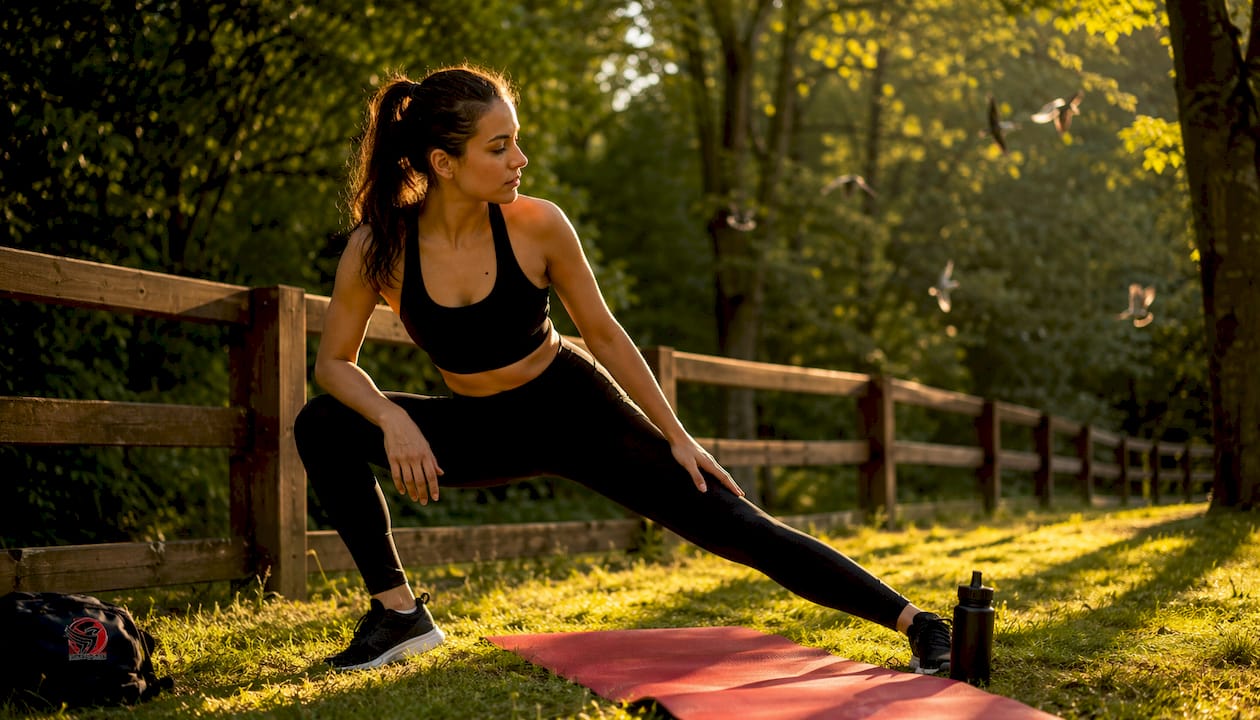
- Physical warm-up — light movement to raise your heart rate and loosen up, usually 5–10 minutes
- Awareness drills — exercises that train you to read a space, notice exits, and recognise pre-attack indicators
- Skills work — one or two techniques chosen specifically for your body and risk profile, practised with repetition
- Scenario drill — a low-pressure role-play that puts the skill in context (e.g., a verbal boundary followed by a physical escape)
- Debrief — the instructor reviews what you did well and sets one clear homework task
What to wear and bring: comfortable athletic clothing you can move freely in, flat-soled shoes or bare feet on a mat, and a water bottle. Leave jewellery at home.
Homework: practise your one technique for five minutes daily. For awareness skills, try the self-defence training at home exercises Streetsafeselfdefence recommends between sessions.
Pro Tip: Write down three specific situations that make you feel unsafe before your first session. Sharing those with your instructor in the intake conversation will shape the entire curriculum toward what actually matters for your life.
Why reality-based, trauma-informed training matters in Canada
Reality-based, trauma-informed training better prepares people for real incidents while keeping legal and proportional responses at the centre of every lesson. That combination is not just good pedagogy; it is legally relevant under Canadian law.
Section 34 of the Criminal Code permits defensive force when a person reasonably believes force or a threat is being used against them, and the response must be reasonable in the circumstances. Courts assess reasonableness using factors including the nature of the threat, its imminence, the relationship between the parties, and proportionality. The Justice Canada technical guide on Section 34 also notes that whether retreat was available is a relevant consideration.
What this means practically: training that emphasises avoidance, de-escalation, and escape first, with physical force as a last resort, aligns with how Canadian courts evaluate defensive actions. An instructor who skips straight to striking techniques without teaching the avoidance-first framework is not just missing the point; they may be setting clients up for legal exposure.
Key reasons scenario-based, reality-informed training outperforms sport martial arts for personal safety:
- Stress inoculation through scenario drills builds decision-making capacity when fear degrades fine motor control
- Avoidance-first frameworks reduce the likelihood of physical confrontation reaching the point where force is needed
- Trauma-informed delivery means clients with prior experiences of violence are not re-traumatised during training
- Mobile, on-site delivery from providers like Streetsafeselfdefence removes access barriers for people who cannot reach a gym
For a plain-English breakdown of how Section 34 applies to everyday situations, Streetsafeselfdefence’s guide on understanding self-defence in Canada is a practical starting point.
Key takeaways
Private, reality-based self-defence lessons with a trauma-informed, mobile instructor give you the fastest path to practical safety skills that hold up under real-world stress and Canadian law.
| Point | Details |
|---|---|
| Book a structured intro session | A single focused lesson establishes your baseline and gives you one practisable technique immediately. |
| Vet for reality-based credentials | Prioritise instructors who teach avoidance-first frameworks, not sport martial arts belts. |
| Understand Section 34 | Canadian law requires proportional responses; training should reflect that from the first session. |
| Use mobile delivery | On-site instruction removes scheduling barriers and lets you train in your actual environment. |
| Streetsafeselfdefence | Offers mobile private programmes deliverable in as little as five hours, tailored to individuals, women, students, and professionals across Canada. |
What private lessons taught me about what people actually need
Most people who seek out individual self-defence instruction are not looking to become fighters. They want to feel less afraid walking to their car at night, or they want to know what to do if a situation at work escalates. That gap between what people fear and what they actually need to learn is where private lessons do their best work.
The conventional wisdom in self-defence circles is that more technique equals more safety. It does not. A person who has practised one wrist release under stress a hundred times is safer than someone who has watched fifty YouTube tutorials on a dozen different moves. Private coaching forces that repetition in a way group classes rarely can, because the instructor can slow down, adjust, and push at exactly the right moment for that one person.
What gets underestimated is how much the legal and psychological dimensions matter. Knowing that Canadian law rewards proportional, avoidance-first responses changes how you train. It shifts the focus from “how do I win a fight” to “how do I avoid, de-escalate, and exit,” which is both safer and more legally defensible. Trauma-informed delivery is not a soft add-on; it is what makes training accessible to the people who need it most. A survivor of violence who shuts down during a drill learns nothing. An instructor who recognises that and adjusts in real time is worth every dollar of the premium over a group class.
Streetsafeselfdefence private lessons: how to book
Streetsafeselfdefence brings private, reality-based self-defence training directly to you, whether that is your home, your workplace, or your community space. The mobile model means no commute, no gym membership, and no fixed schedule standing between you and practical safety skills.
Programmes are available for individuals, women, high-school students, real estate professionals, Indigenous communities, and corporate teams. A full foundation is achievable in as little as five hours, making it realistic even for people with demanding schedules. Every programme is built around your goals, your body, and the specific situations you want to be prepared for.
What new clients can expect when booking:
- An intake conversation to clarify goals, physical considerations, and scheduling
- A structured first session with clear safety protocols and a consent-first approach
- A short homework plan to build on each session between meetings
- Flexible session lengths and package options, including single sessions and multi-week programmes
To get started, visit Streetsafeselfdefence and contact the team directly to discuss your needs and schedule your first session.
Useful sources and further reading
- Section 34 of the Criminal Code — Defence of person (Justice Canada)
- Self-defence — detailed examination, Justice Canada technical guide
- The self-defence continuum (YMAA)
- Self-defence 101: a beginner guide for staying safe in Canada
- Understanding self-defence in Canada — Streetsafeselfdefence
- Self-defence training at home — Streetsafeselfdefence
- What to expect in a self-defence lesson — Streetsafeselfdefence
- Women’s self-defence — Streetsafeselfdefence
This article provides general information about self-defence training and Canadian law. It is not legal advice. Confirm how Section 34 applies to your specific situation with a qualified legal professional or by consulting the primary Justice Canada sources directly.
