

Do a 30-second safety audit every time you approach or leave your vehicle. That single habit, backed by CCOHS workplace guidance and the prevention-first training Streetsafeselfdefence delivers, is the most effective thing you can do right now.

Start here:
- Pause at the building exit and scan the lot before you move.
- Identify the nearest lit, populated exit route.
- Have your keys in hand before you step outside.
- Walk with purpose and keep your eyes up.
Employers share this responsibility. Canadian workplace safety guidance treats parking facilities as part of the workplace, which means risk assessments and staff training are obligations, not optional extras.
Pro Tip: If you manage a team, the quickest win you can offer staff today is a one-page printed checklist they carry to the lot. Streetsafeselfdefence delivers exactly this kind of practical, mobile training to workplaces across Canada.
Table of Contents
- Why parking lots are a personal-safety risk in Canada
- What to prepare before you leave the building
- Exactly what to do as you approach, enter, and leave your vehicle
- If you feel threatened: escape first, then call for help
- What effective parking lot self-defence training actually teaches
- How organisations should add parking lot safety to workplace programs
- How to choose a parking lot safety course or provider
- Key takeaways
- Why prevention-first training makes the difference in parking lots
- Streetsafeselfdefence offers mobile training you can book now
- Useful sources and further reading
Why parking lots are a personal-safety risk in Canada
Parking lots present identifiable personal-safety risks, and Canadian employers are responsible for addressing them. The CCOHS is explicit: parking facilities are workplace spaces, and employers must assess hazards, implement controls, and provide training on situational awareness and conflict management.
Common risk factors include:
- Low or inconsistent lighting, especially in multi-level garages.
- Obstructed sight lines from pillars, large vehicles, or overgrown vegetation.
- Lone workers leaving during off-hours or after dark.
- High foot-traffic blind spots near stairwells and elevator banks.
“Employers should assess the risk of violence in parking lots and take steps to eliminate or minimize those risks. This includes providing adequate lighting, limiting access, maintaining sight lines, and providing training.”
CCOHS, Violence and Harassment in the Workplace
Weather compounds these risks. Poor visibility during Canadian winters, combined with bulky clothing that limits peripheral awareness, makes December through February a period worth extra attention. Risk-management guidance from Intact Public Entities reinforces that low-cost fixes, such as lighting maintenance and trimmed vegetation, reduce exposure quickly while longer controls are planned.
Pro Tip: Walk your facility’s parking area after dark once a month. You will notice hazards that are invisible during a daytime desk review, and the fix is often a single burned-out bulb or an overgrown hedge.
What to prepare before you leave the building
Preparation shortens reaction time. Have your keys, phone, and a personal alarm ready before you step outside, and have a clear exit plan in mind.
Items to carry:
- Keys in hand, not buried in a bag.
- A charged phone with emergency contacts accessible.
- A personal alarm or whistle clipped to a bag or jacket.
Clothing and mobility tips:
- Wear footwear you can move quickly in, especially on icy Canadian surfaces.
- Keep bags close to the body and zipped.
- Avoid bulky headphones that block ambient sound.
Before leaving work, run this quick check:
- Keys in hand? Phone charged? Alarm accessible?
- Is a colleague leaving at the same time, or can you arrange a buddy?
- Has security been notified if you are working unusually late?
The CCOHS parking lot PDF specifically recommends parking near main entrances or attendants and keeping valuables out of sight. Both reduce the likelihood of being targeted before you even reach the car.
Pro Tip: Avoid scrolling your phone while walking to your vehicle. Distraction is the single biggest factor that makes people appear vulnerable to an opportunistic threat.
Exactly what to do as you approach, enter, and leave your vehicle
Follow ordered steps when you reach the vehicle to keep control of the environment.
- Approach: Scan under the vehicle and glance through the windows before you get close. Look for anyone loitering nearby.
- Unlock: Use your remote to unlock only the driver’s door. Do not unlock all doors until you are inside.
- Enter: Get in quickly, lock the doors immediately, and do not sit with the door open.
- Before driving: Do a quick check of the back seat. Then go. Do not sit in a parked car for an extended time.
- Departure: Back out carefully and keep your windows up until you are clear of the lot.
Avoid these behaviours:
- Fumbling for keys at the car door.
- Leaving bags or electronics visible on seats.
- Sitting in a parked car with the engine off for more than a minute.
For self-defence tactics specific to vehicles, your car itself is a protective tool. Use back-in parking where possible so you can exit forward quickly. The panic button on your key fob attracts immediate attention and can interrupt a threat before it escalates.
Pro Tip: Remote start is not just a comfort feature. Starting your car from inside the building gives you a warm, ready vehicle and lets you observe the lot before committing to the walk.

If you feel threatened: escape first, then call for help
If threatened, escape is the priority. Every other option comes second.
Immediate response steps:
- Move toward a populated, lit area as quickly as possible.
- Use your horn, panic alarm, or personal alarm to attract attention.
- Call 911 or your building’s security line as soon as you are safe.
Do:
- Run toward people, light, and noise.
- Make as much noise as possible.
- Use your vehicle as a barrier if escape on foot is not possible.
Do not:
- Argue, engage, or approach a threatening person.
- Return to your vehicle if someone is following you.
- Assume the threat will pass if you ignore it.
Red-flag behaviours to watch for:
- Someone loitering near your vehicle without a clear purpose.
- Multiple occupants in a parked car who appear to be watching.
- A vehicle that blocks your exit route.
When you spot any of these, trust the instinct. Redirect your route, re-enter the building, and notify security. Situational awareness training teaches you to read these cues before a situation escalates.
What effective parking lot self-defence training actually teaches
Effective training is prevention-first. It teaches situational awareness, clear decision-making, and simple physical options that work regardless of fitness level or age.
A well-designed curriculum covers:
- Awareness drills and the 30-second audit as a repeatable habit.
- Verbal boundary-setting and de-escalation language.
- Escape and egress drills from vehicles and confined spaces.
- Low-force defensive options that do not require strength or martial arts experience.
- Using your vehicle as a physical barrier.
Situational awareness exercises from Canadian security training literature recommend regular scenario practice, briefings, and incident debriefs to keep skills sharp. Workplace-violence.ca’s situational awareness resource describes a three-level model: perceiving cues, understanding their meaning, and anticipating what happens next. That progression is exactly what scenario-based parking lot drills practise.
“Situational awareness connects observed cues with likely meanings and drives early action — making it a critical skill not just for physical safety, but for psychological health and early intervention in the workplace.”
Talent Canada
Streetsafeselfdefence delivers this curriculum through trauma-informed instruction, which means the training respects participants’ prior experiences and builds confidence rather than fear. A five-hour reality-based workshop can be delivered on-site at your workplace, school, or community space.
How organisations should add parking lot safety to workplace programs
Organisations must treat parking facilities as part of the workplace and include them in risk assessments and training schedules. CCOHS guidance and Intact’s risk-management recommendations both support this framing.
Risk-assessment checklist:
- Lighting audit across all parking areas, including stairwells and elevator banks.
- Sight-line review: trim vegetation, reposition signage, assess pillar blind spots.
- Review hours of use and identify when lone workers are most exposed.
- Confirm camera coverage and test that footage is accessible to security staff.
- Assess access control measures for entry points to the facility.
Policy items to adopt:
- A buddy system for staff leaving after hours.
- A clear reporting procedure for suspicious activity.
- On-site escort availability for lone workers.
- Annual training refreshers on situational awareness and parking lot protocols.
Timeline:
- 30 days: Complete lighting and sight-line fixes. Distribute one-page checklists to staff.
- 90 days: Run a training pilot with a prevention-first provider. Measure confidence before and after.
For broader workplace violence prevention training, parking lot safety fits naturally into an existing programme rather than requiring a standalone initiative.
Pro Tip: Assign one person to own the parking lot risk assessment. When no one owns it, nothing gets fixed.

How to choose a parking lot safety course or provider
Choose courses that are prevention-first, trauma-informed, scenario-based, and designed to build measurable confidence and practical skills.
Decision criteria:
- Does the curriculum lead with awareness and prevention, not combat?
- Is the instruction trauma-informed and accessible to all fitness levels?
- Can the provider deliver on-site at your location?
- Does the course include scenario practice, not just lecture?
- Can the content be tailored to your group (students, real estate agents, corporate teams)?
Questions to ask any provider:
- What does a typical session look like, and how long does it run?
- How do you accommodate participants with prior trauma?
- Can you provide references from similar organisations?
- What measurable outcomes do participants leave with?
- Do you carry liability insurance for on-site delivery?
Streetsafeselfdefence meets all of these criteria. The programme is mobile, trauma-informed, and available as a five-hour workshop or shorter on-site session. It is tailored for high school students, corporate teams, real estate professionals, Indigenous communities, and more. Trauma-informed self-defence is a core design principle, not an add-on.
Key takeaways
The most effective approach to parking lot safety combines a repeatable 30-second audit, practical preparation, an escape-first response protocol, and employer-led risk assessments backed by prevention-first training.
| Point | Details |
|---|---|
| Do the 30-second audit | Scan, check exits, confirm keys, and move with purpose every time you approach your vehicle. |
| Prepare before you leave | Keys in hand, phone charged, personal alarm accessible, and a clear exit route in mind. |
| Escape first | If threatened, move toward people and light immediately; use your horn or alarm to attract attention. |
| Employers have a duty | CCOHS guidance requires parking facilities to be included in workplace risk assessments and training plans. |
| Streetsafeselfdefence | Offers mobile, trauma-informed, five-hour reality-based training tailored for students, employees, and organisations across Canada. |
Why prevention-first training makes the difference in parking lots
Most people assume self-defence training means learning to fight. That assumption is the biggest barrier to people actually getting trained, and it is wrong.
The parking lot is not where most threats begin. They begin in the seconds before, when someone is distracted, unprepared, or unaware of their surroundings. That is the gap that prevention-first training closes. A five-hour workshop does not turn participants into fighters. It turns them into people who notice, prepare, and move with confidence, which is what actually prevents most incidents.
Trauma-informed instruction matters here for a specific reason. Many participants, particularly women, students, and lone workers, have prior experiences that make physical training feel unsafe or inaccessible. A programme that ignores that history does not build real confidence. It builds performance anxiety. Streetsafeselfdefence’s approach is designed around this reality, which is why the training works for such a wide range of groups.
The organisations that see the best outcomes are not the ones that run a single session and move on. They are the ones that treat parking lot safety as a recurring agenda item, pair physical training with policy changes, and give staff a simple habit, like the 30-second audit, to practise between sessions.
Streetsafeselfdefence offers mobile training you can book now
Streetsafeselfdefence brings reality-based, trauma-informed parking lot safety training directly to your school, workplace, or community space. No venue to find, no travel required for your group.
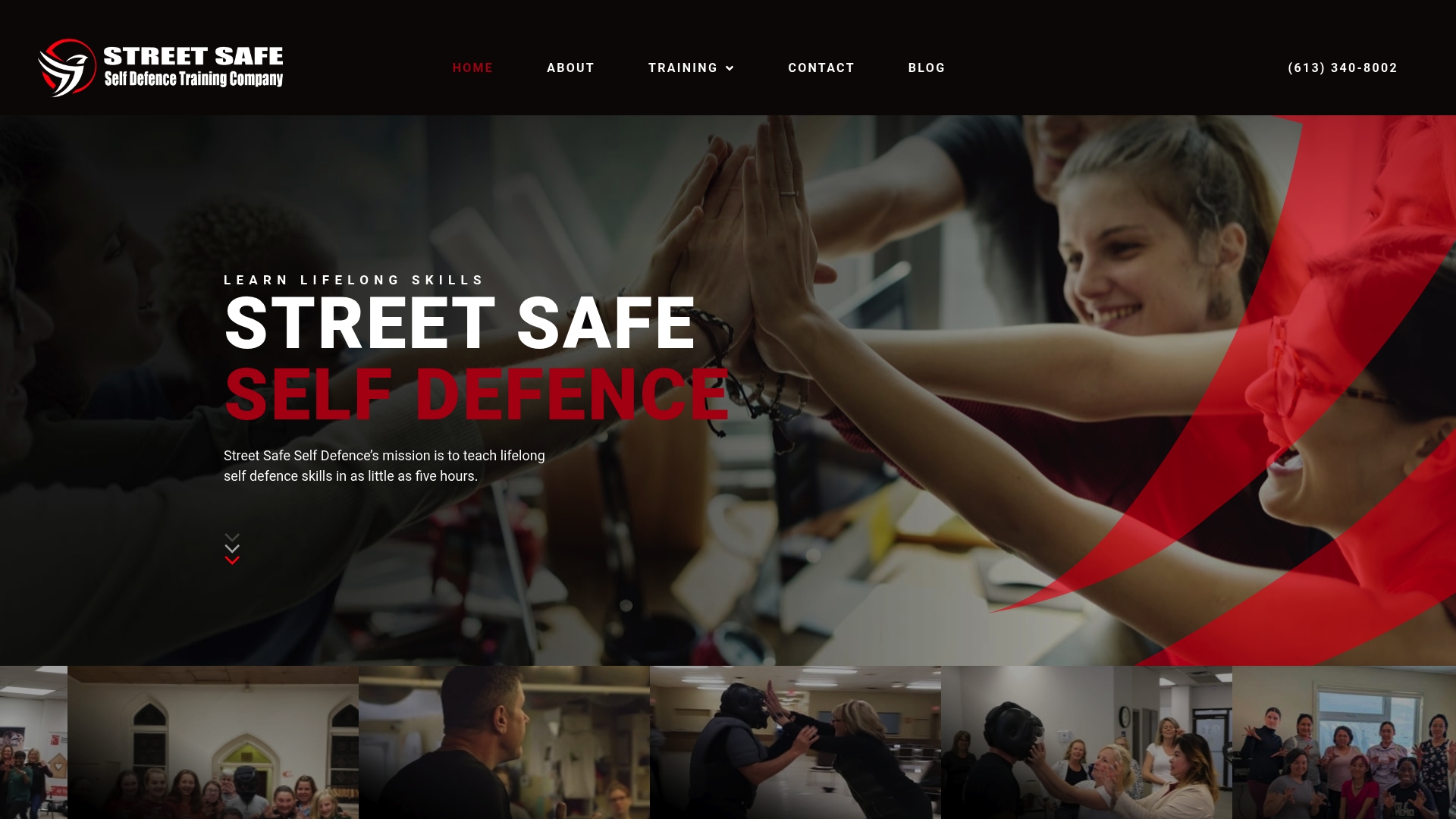
The five-hour workshop covers the full curriculum: the 30-second audit, situational awareness drills, escape and egress practice, verbal boundary-setting, and low-force defensive options. Shorter on-site sessions are available for teams that need a focused refresher. Every programme is tailored to your group, whether that is high school students, corporate staff, real estate professionals, or Indigenous communities.
Self-defence training at home is also available for individuals who want to build skills at their own pace. Visit streetsafeselfdefence.com to request a quote or check availability for your group.
This article provides general safety information and is not a substitute for professional legal or security advice. Confirm current workplace obligations with CCOHS or a qualified occupational health and safety professional.
Useful sources and further reading
The guidance in this article draws on the following Canadian workplace safety and situational awareness resources.
- Violence and Harassment in the Workplace — Parking lot safety
- Risk Management Considerations for Parking Lot Safety
- The 30-Second Parking Lot Audit: How to Spot Trouble Before it Spots You
- Situational Awareness fast fact and exercises (workplace-violence.ca)
- Situational awareness: a critical skill for prevention and safety (Talent Canada)
