

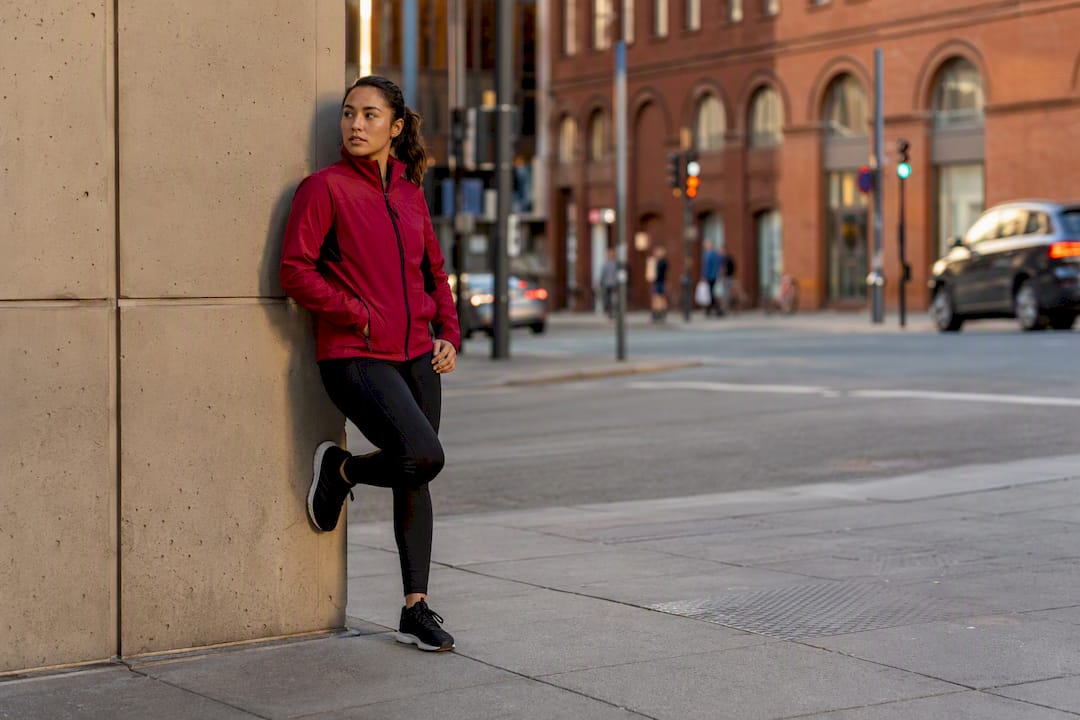
Jeff Cooper’s Color Code is a four-stage mental model for awareness: White, Yellow, Orange, and Red. Condition Yellow is the state civilians should aim for most of the time. It is not a threat meter and it does not require a weapon. It’s a mindset shift that helps you notice trouble early enough to walk away from it.
TL;DR:
- Practicing daily arrival scans and noting two exits improves situational awareness without creating anxiety or fatigue.
- Maintaining relaxed Yellow awareness helps identify early warning signs while avoiding burnout from constant vigilance.
- Recognizing specific Orange cues like closing distances or odd body language allows timely route changes and risk mitigation.
- Red indicates confirmed threats, and effective response involves avoidance, distance, or self-defense, not panic or overreaction.
- Regular drills like naming objects, partner checks, and verbal rehearsals reinforce Yellow habits and boost real-world preparedness.
Table of Contents
- What is the Cooper color code, and why does Condition Yellow matter most?
- Condition White: the state that makes you an easy target
- Condition Yellow: relaxed awareness, not paranoia
- Condition Orange: when something specific pulls your focus
- Condition Red: the action phase, not a hair-trigger
- How to practise the Cooper color code without stressing yourself out
- What people get wrong about the color code
- How Street Safe Self Defence teaches this in practice
- Why I teach Yellow as the baseline, not Orange
- Practise the color code with hands-on training that comes to you
- Sources
What is the Cooper color code, and why does Condition Yellow matter most?
Jeff Cooper, a U.S. Marine and firearms instructor, built the color code to describe mental states of readiness rather than a scale that measures how dangerous a situation is. That distinction matters more than most people realize when they first hear about it. Cooper’s system tracks what’s happening in your head, not what’s happening on the street.
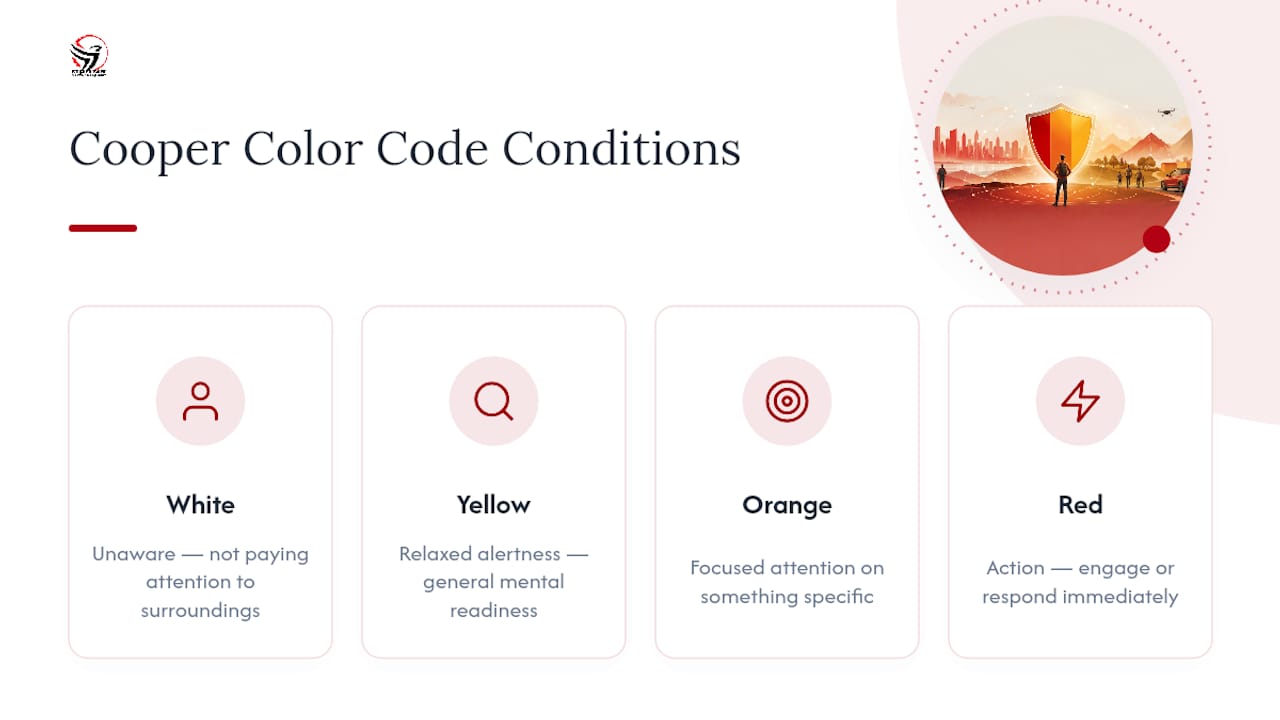
Trainers and safety writers who teach the Cooper color code consistently frame it the same way: White is unaware, Yellow is relaxed alertness, Orange is focused attention on something specific, and Red is action. Police1 covers this progression as the foundation of its trainer curriculum, describing the four conditions as a shared language officers and civilians can both use. Street Safe Self Defence teaches the same four stages, adapted for people who will never carry a firearm but still need to spot trouble before it reaches them.
Condition White: the state that makes you an easy target
White means you’re not paying attention to your surroundings at all. Picture someone scrolling their phone while walking through a parking garage, earbuds in, head down. Or someone so exhausted after a night shift that they don’t register a person following two steps behind. White isn’t laziness. It’s the natural resting state of a brain that hasn’t been trained to scan.
The risk is simple: you miss the early, quiet warning signs that precede almost every violent encounter. By the time something forces your attention, you’ve lost the seconds you needed to avoid it.
Three habits pull you out of White fast:
- Walk with your head up and phone away when moving through transitions like parking lots, stairwells, or building entrances.
- Take a five second visual sweep every time you enter a new space.
- Drop one habitual distraction, like one earbud instead of two, in unfamiliar or crowded areas.
Condition Yellow: relaxed awareness, not paranoia
Yellow is calm, sustained attention to your environment without expecting anything bad to happen. It’s the state Cooper intended people to live in most of their waking hours, and it’s the one Street Safe Self Defence builds every course around. Being in Yellow feels closer to mindfulness than vigilance. You’re noticing sights, sounds, and the flow of a room, not scanning for enemies.
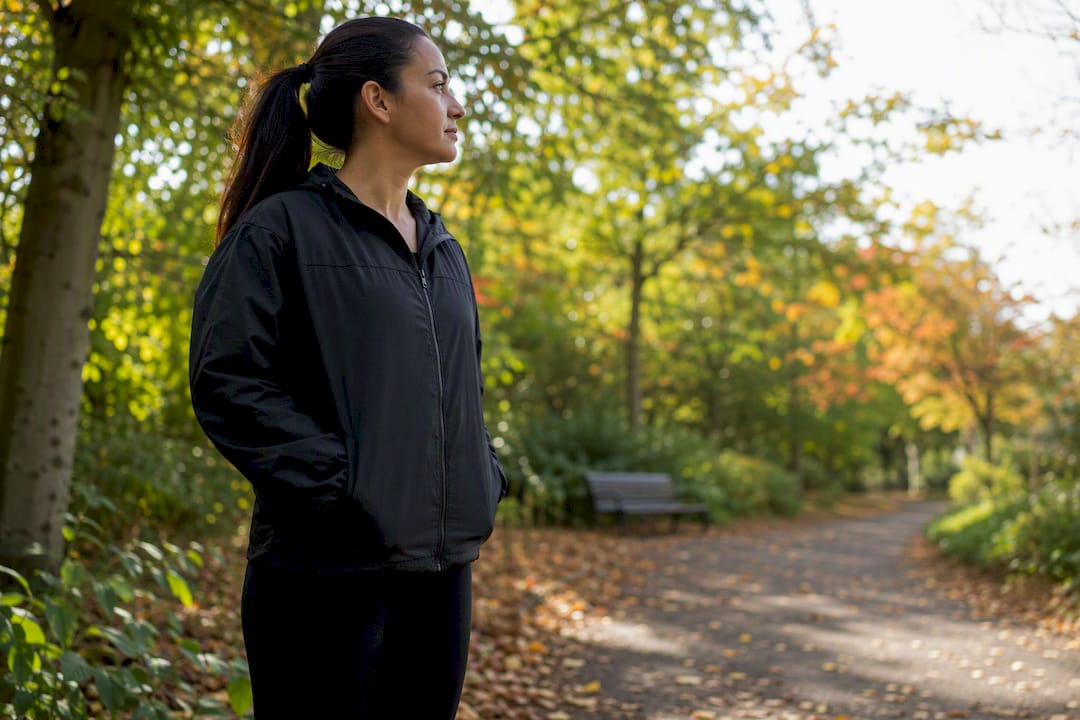
The CVPSD describes Yellow as awareness of your surroundings without extreme reaction, and that word choice matters. Paranoia treats every stranger as a suspect. Yellow just keeps your senses turned on.
A basic Yellow checklist includes:
- Locate the exits in any room you enter, even briefly.
- Notice who else is nearby and whether their behaviour matches the setting.
- Track unusual sounds, like raised voices or footsteps that don’t match the pace of the crowd.
- Check your own posture and confirm you’re not buried in a phone or distracted conversation.
Building this habit doesn’t take long sessions. A ten second scan when you get out of your car, repeated daily, does more than an occasional hour of “practising awareness.”
Pro Tip: Set a phone reminder labelled “scan” for three random points during your day. When it buzzes, take five seconds to name three things you notice around you. That’s the entire drill.
Condition Orange: when something specific pulls your focus
Orange is targeted attention. Something in your environment has given you a reason to watch it closely: a person moving against the flow of foot traffic, someone matching your pace without matching your direction, a car idling too long near an entrance. SAFETY4SEA describes Orange as the point where a specific alert narrows your attention onto one person or one detail.
The goal in Orange is observation, not confrontation. Watch for intent cues like sudden closing distance, hands disappearing into pockets, or body language that doesn’t fit the setting. Don’t fixate on appearance or assumptions unrelated to behaviour.
Useful if-then plans for Orange include:
- If someone closes distance in a parking lot, cross to the opposite side and head toward a populated area.
- If a person lingers near your vehicle, delay approaching it and circle toward a store entrance instead.
- If you feel unsettled without a clear reason, trust it and change your route.
Most Orange situations resolve themselves without ever reaching Red. That’s the outcome you want.
Condition Red: the action phase, not a hair-trigger
Red means the threat is confirmed and you’re acting, whether that action is running, shouting for help, physically defending yourself, or getting behind a locked door. Police1 makes a point of correcting a common myth here: Red is not simply the moment a trigger gets pulled or a punch gets thrown. It’s the entire action phase, and for most civilians, that action is avoidance or escape, not confrontation.
What Red looks like depends entirely on the person and the situation:
- Leaving immediately through the nearest safe exit.
- Creating distance and calling for help loudly enough to draw attention.
- Using physical self-defence only when escape isn’t possible.
The people who respond best in Red aren’t the ones who trained for Red but those who engaged in consistent combat performance training to build lasting awareness and readiness. They’re the ones who spent months in Yellow, noticed the shift into Orange early, and already had a plan running before Red ever arrived. Rehearsal removes hesitation, and hesitation is what costs people the most time in a real emergency.
How to practise the Cooper color code without stressing yourself out
Making Yellow automatic doesn’t require constant effort. It requires small, repeated routines attached to things you already do every day.
Daily routines:
- Arrival scan. Every time you get out of a car, enter a building, or step off transit, take five to ten seconds to note exits, people, and anything out of place.
- Exit mapping. In any new space, silently identify two ways out within your first thirty seconds inside.
- Phone discipline. Keep your device down during transitions, walking through lots, lobbies, or stairwells, even if you check it again once settled.
Weekly practice:
Pick one unfamiliar environment each week, a new coffee shop, a different transit stop, an unfamiliar block, and run a full Yellow pass: scan on arrival, note two exits, watch the flow of people for thirty seconds before settling in. This single weekly rep builds the instinct faster than daily repetition in places you already know by heart.
Three low-stress drills:
- The naming drill. Anywhere you’re standing, silently name five things happening around you: sounds, movement, people, objects, distances. This takes under a minute and trains observation without adding anxiety.
- The partner check. Ask a friend or family member to test you: after leaving a store together, have them ask what colour the exit sign was, or how many people were near the door. Missed details show you where your Yellow habit needs work.
- The verbal line. Rehearse one short, calm phrase you’d use to de-escalate or draw attention, out loud, a few times a month, so it’s ready if you ever need it.
Common settings make this easier to apply. On a commute, Yellow means checking who boards after you and where the next stop’s exits are. In a parking lot at night, it means scanning rows before you’re halfway to your car, not after. At a work event or open house, it means knowing where the doors are before the room gets crowded. Street Safe Self Defence builds these exact scenarios into its training because they map to situations people actually live in, not hypothetical ones.
Pro Tip: Attach your scan to something you already do automatically, like putting your seatbelt on or locking your front door. Habit stacking makes Yellow stick far faster than trying to remember it cold.
What people get wrong about the color code
The biggest misconception treats Cooper’s model like a threat-level gauge, similar to a wildfire risk index that ticks up and down based on outside events. It isn’t. It describes your mental state, not the danger level of the world around you. You choose to be in Yellow. Nothing forces you into it.
A second mistake is trying to live in Orange or Red constantly, believing that more vigilance equals more safety. It doesn’t. Sustained high alert burns people out, and burned out attention is worse than relaxed attention. Yellow exists specifically to avoid that fatigue while still keeping you switched on.
A few other clarifications worth keeping in mind:
- Some trainers add extra stages, like a “Condition Black,” but these are later additions, not part of Cooper’s original four.
- The code doesn’t teach you how to physically defend yourself or what’s legally permissible if a confrontation happens.
- Legal boundaries around self-defence vary by jurisdiction, and understanding those rules requires separate research from awareness training.
How Street Safe Self Defence teaches this in practice
Street Safe Self Defence builds its curriculum around the same four stages, but translates them into drills people can run in a single short session rather than a weekend retreat. Instructor Rob Andress designs sessions around trauma-informed methods, which means the awareness training never relies on manufactured fear or shock tactics to make a point stick.
A typical session ties directly to the color code framework:
- Short arrival scans and exit mapping practised in the actual room the class is held in, not a hypothetical scenario.
- Roleplayed Orange situations, like someone closing distance, run at low intensity so participants build recognition without adrenaline overload.
- A single rehearsed verbal or physical response participants can access if a low-probability Red moment ever arrives.
Course pages for high school programs, realtor safety training, and trauma-informed sessions each adapt this same structure to the specific risks those groups face day to day.
Why I teach Yellow as the baseline, not Orange
My teaching philosophy is simple: Yellow should feel like nothing, not like effort. If awareness training leaves someone anxious after class, it failed. Start with one habit this week, an arrival scan every time you get out of your car, and track it for seven days. Notice what you catch that you’d have missed a month ago. If you want structured feedback on your progress, guided training closes that gap faster than practising alone.
— Rob
Practise the color code with hands-on training that comes to you
Reading about Condition Yellow gets you halfway there. Practising it under mild pressure, with feedback from someone trained to spot what you’re missing, gets you the rest of the way. Street Safe Self Defence runs mobile training sessions that bring these drills directly to your home, workplace, or school, so you skip the commute to a studio and the intimidating group class atmosphere.
A typical session runs a few hours and focuses on exactly what this article covered: arrival scans, exit awareness, if-then planning, and one rehearsed response for a worst-case moment, all taught using trauma-informed methods regardless of age or fitness level. Programs exist for women’s classes, high school groups, real estate professionals, and Indigenous communities, each adapted to the specific situations those groups face most often. Visit Street Safe Self Defence to book a session and start turning Yellow into a habit instead of a concept.
Sources
- Exploring the ‘ready state’ conditions by Jeff Cooper — a guide to personal awareness and readiness
- Cooper’s “Color Code”: What is your awareness level? — SAFETY4SEA
- Cooper’s colors: a simple system for situational awareness — Police1
- Jeff Cooper — Wikipedia
- Cooper’s color code: a simple way to stay aware every day — Paratus