

Reality-based, trauma-informed personal-safety training for people who work alone is the most direct way to reduce risk in the field. If you manage a team of realtors, home-visit nurses, or field technicians, the clearest next step is to book a mobile on-site workshop or request a planning call with a qualified provider.
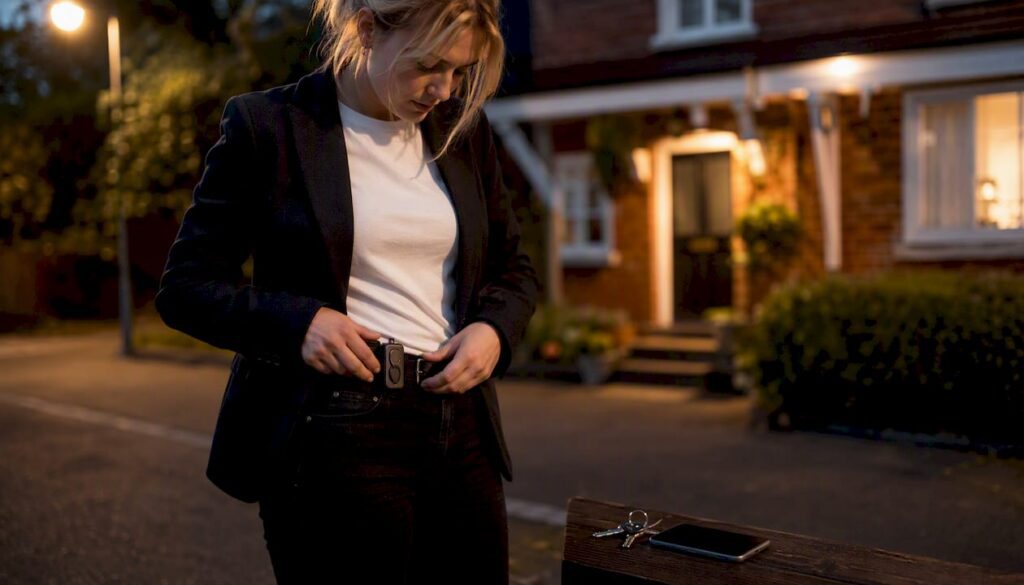
Mobile instructors bring the training directly to your workplace, eliminating the logistics of sending staff off-site. Sessions prioritise prevention, situational awareness, and de-escalation, with physical skills taught only as a last resort. The practical outcome is staff who make better decisions under stress and build safer routines into every client interaction.
To get started:
- Request a quote with your participant count and preferred dates
- Confirm participant roles so the provider can tailor scenarios
- Ask about customisation for your specific work environment
Key takeaways
Reality-based, trauma-informed lone-worker safety training reduces risk by building prevention skills before a threat becomes physical, making it the most practical investment for Canadian field staff and the organisations that manage them.
| Point | Details |
|---|---|
| Prevention comes first | Training should prioritise situational awareness and de-escalation; physical skills are a last resort. |
| Know your risk profile | Roles combining isolation with emotional stressors or valuable assets on site carry the highest risk. |
| Vet your provider carefully | Ask for instructor CVs, a trauma protocol, role-specific scenarios, and participant feedback before booking. |
| Measure and refresh | Run pre/post confidence surveys and schedule a refresher at 6–12 months to maintain skill retention. |
| Streetsafeselfdefence | Delivers mobile on-site workshops tailored for realtors, field staff, and school teams across Canada. |
Table of Contents
- Who benefits most from lone-worker safety workshops?
- What does a lone-worker safety training session actually cover?
- How are workshops delivered, and what do you need to arrange?
- How do you choose the right training provider?
- How do you prepare staff for a trauma-informed session?
- How do you measure whether the training worked?
- Why prevention-first training is the only approach worth booking
- Book an on-site lone-worker safety workshop with Streetsafeselfdefence
- Sources
Who benefits most from lone-worker safety workshops?
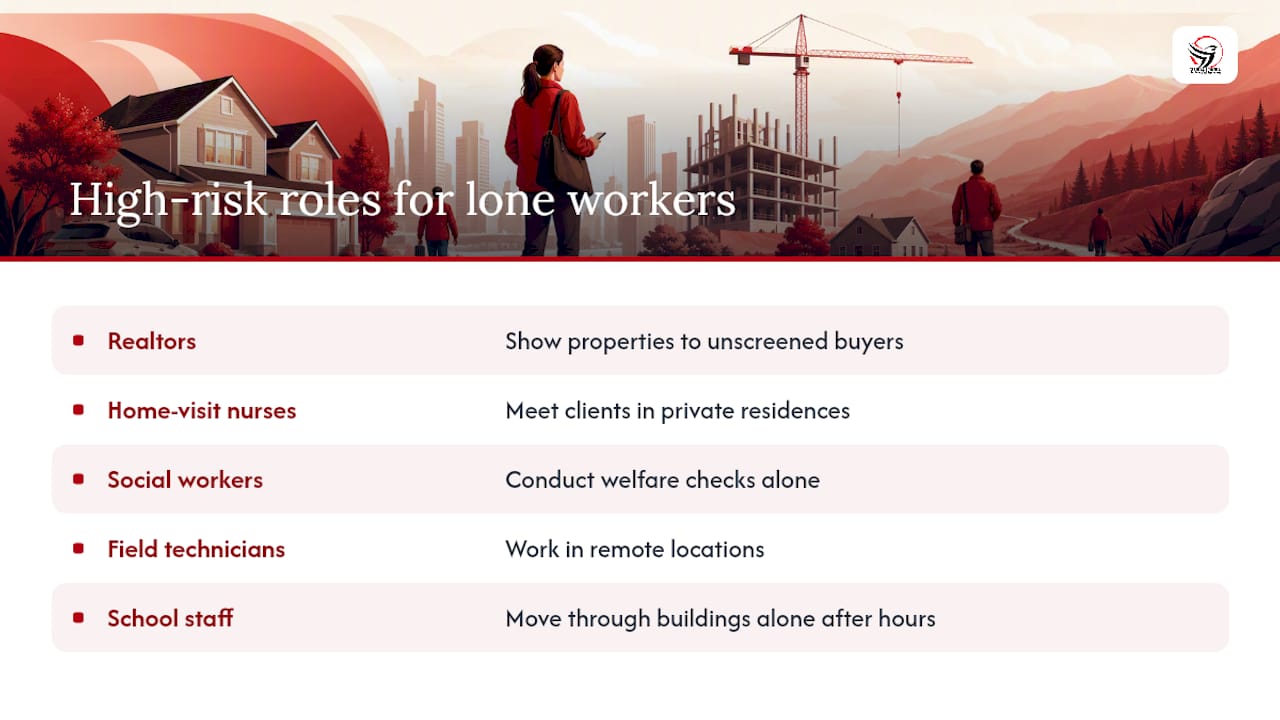
The roles that carry the highest personal-safety risk share a common pattern: isolation combined with either emotional stressors, valuable assets, or unknown clients. Realtors showing occupied or vacant properties to unscreened buyers, home-visit nurses and therapists meeting clients in private residences, social workers conducting welfare checks, field technicians working in remote locations, and school counsellors or custodial staff who move through buildings alone after hours all fit that profile.
Situations that sharpen the risk include evening appointments, properties in isolated areas, cash or key transactions, emotionally charged client meetings, and digital fraud attempts that precede an in-person encounter. CREA’s survey data shows that 9.6% of REALTORS® have been the victim of a crime while performing their duties, and that 45.1% of respondents had not implemented any safety protocols at the time of the survey.
Pro Tip: Prioritise roles that combine physical isolation with either an emotional stressor (a distressed client, a dispute) or a tangible asset on site, such as cash, keys, or confidential records. Those combinations raise risk faster than either factor alone.
Brokerages and healthcare organisations are increasingly booking group workshops to train entire teams rather than sending individuals to public classes; see SEO for Real Estate Agents: Essential Strategies – Todd Stager for ideas on internal communication and staff outreach. That shift reflects a broader recognition that REALTOR® safety is a brokerage-level responsibility, not just a personal one.
What does a lone-worker safety training session actually cover?
A well-structured session moves through eight modules, each with a clear learning outcome:
- Situational awareness — reading environments, exits, and behavioural cues before a threat develops
- Spotting predatory behaviour and red flags — recognising grooming tactics, pretexting, and escalating aggression early
- Verbal de-escalation — language and tone that reduce tension without surrendering control
- Boundary setting — communicating limits clearly and consistently in professional contexts
- Safe disengagement and movement — creating distance and exiting safely when a situation deteriorates
- Reality-based physical skills — basic, high-percentage techniques taught as a genuine last resort
- Digital and fraud awareness — identifying scam calls, fake buyer profiles, and online targeting that precede in-person risk
- Trauma-informed support and aftercare — debrief protocols and access to support after distressing scenarios
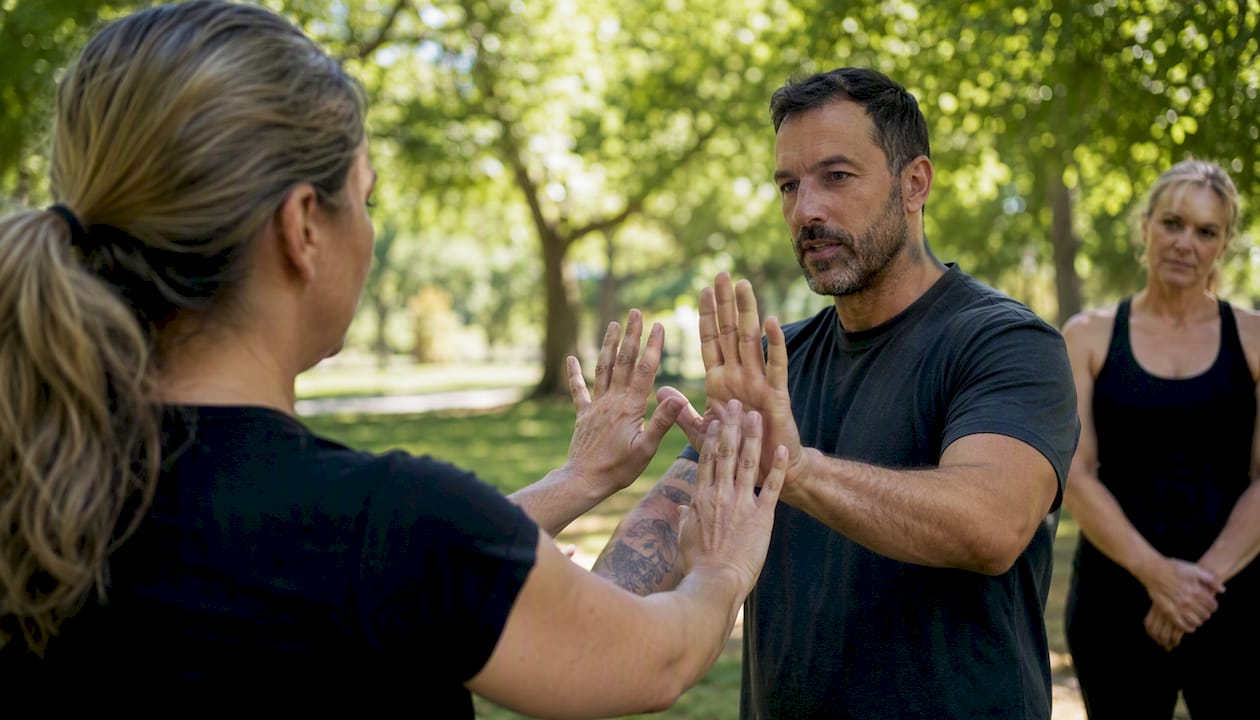
A typical half-day runs 4–5 hours. Roughly the first 90 minutes cover theory, red-flag recognition, and group discussion. The middle two hours focus on scenario rehearsal, with participants practising decision-making in role-specific situations. The final 30–45 minutes are reserved for debrief, questions, and follow-up planning.
Prevention comes first throughout. Reality-based training that centres scenario rehearsal builds decision-making under stress more reliably than programs that focus only on physical technique. Physical skills are introduced only after participants understand why avoidance and de-escalation are the preferred outcomes.
Pro Tip: When requesting a proposal, ask the provider to include at least two role-specific scenarios drawn from your team’s actual work situations. Generic scenarios produce generic responses; situational awareness skills transfer better when the context matches the job.
How are workshops delivered, and what do you need to arrange?
Streetsafeselfdefence delivers training in several formats to fit different organisational needs:
- Mobile on-site half-day (4–5 hours), the most common format for corporate and brokerage bookings
- Full-day sessions that add advanced scenario work and train-the-trainer components
- Evening public workshops for individuals who cannot attend during business hours
- Youth and high-school programmes adapted for student groups and school staff
Practical skills work best with groups of 8–20 participants per instructor. Larger groups can be accommodated with co-facilitation, but smaller cohorts allow more scenario repetition per person.
For the venue, you need a clear floor space roughly equivalent to a medium-sized meeting room, chairs for the theory portion, and a private area where participants can speak openly. Mats are optional for most sessions. Consent forms and a brief participant health questionnaire should be collected before the session begins.
Pro Tip: Book at least three to four weeks ahead for a standard half-day. If your team has experienced a recent incident or if participants include staff with known trauma histories, request a pre-session planning call so the instructor can adjust content and pacing before the day.
WSPS lists a 4-hour situational awareness and de-escalation course as a commonly delivered format, with a sample registration fee of $159 for virtual delivery. On-site mobile delivery for a full team typically carries a different pricing structure, covered in the promo section below.
How do you choose the right training provider?
Use this checklist when evaluating providers:
- Trauma-informed approach — does the provider have a written policy on consent, opt-out options, and post-session support?
- Reality-based scenarios — are scenarios drawn from your industry and role, or are they generic?
- Mobile delivery experience — has the provider delivered on-site at workplaces similar to yours?
- Instructor credentials — look for backgrounds in policing, emergency services, social work, or formal trauma training, not just martial arts competition
- Customisation — will they adapt content to your team’s specific risk profile?
- References and testimonials — can they provide feedback from comparable organisations?
- Measurable outcomes — do they offer pre/post confidence surveys or scenario performance rubrics?
- Written safety and consent policy — is it available before you sign a contract?
Ask these questions directly during a provider call: How do you handle a participant who becomes distressed during a scenario? What does your debrief protocol look like? Can you share a sample syllabus and an instructor CV? What follow-up materials do participants receive?
Red flags include an over-emphasis on combative techniques with little prevention content, vague instructor backgrounds, no mention of trauma protocols, and no experience delivering outside a fixed studio.
Trust signals to request before booking: a sample session outline, anonymised participant feedback, instructor CVs, and a written consent and safety policy.
How do you prepare staff for a trauma-informed session?
A pre-session checklist for organisers:
- Distribute a brief participant information sheet explaining what the session covers and what physical activity to expect
- Collect consent forms and a short health questionnaire at least 48 hours before the session
- Communicate clearly that participants can opt out of any scenario at any time, no explanation required
- Identify any staff members with known trauma histories and share that information (with consent) with the instructor in advance
- Arrange for a quiet space where participants can step away if needed
A trauma-informed session looks different from a standard safety course. Instructors use empathy and choice throughout, staging scenarios gradually rather than throwing participants into high-intensity situations without context. Debrief is built into the schedule, not treated as optional. Participants are told where to access support after the session if anything surfaces.
During physical practice, instructors set clear intensity guidelines and demonstrate safe disengagement before asking participants to practise. No one is pressured to perform beyond their comfort level.
Pro Tip: For groups that have experienced a workplace incident in the past 12 months, request a prep call before the session. That conversation lets the instructor adjust scenario intensity and have support resources ready on the day.
How do you measure whether the training worked?
Measurement starts before the session. Collect a short confidence survey from participants covering their ability to recognise risk, de-escalate, and disengage safely. Run the same survey immediately after the session and again at three months.
| Metric | Collection point | Target signal |
|---|---|---|
| Participant confidence (self-rated) | Pre/post session | Increase across all three skill areas |
| Risk-recognition rate in scenarios | During session | Correct identification of red flags |
| Incident report frequency | 6 months post-training | Reduction or earlier reporting |
| Manager observation notes | 4–6 weeks post-session | Visible behaviour change in client interactions |
For follow-up, a practical timeline looks like this:
- Weeks 1–4: Managers reinforce key concepts in team meetings; participants review any take-home materials
- Month 3: A short micro-refresher (60–90 minutes) to revisit the scenarios that generated the most questions
- Months 6–12: A full refresher session, especially for staff who joined after the original training
- Ongoing: Embed a safety check-in into onboarding for all new hires
Embedding training into workplace practice is what separates organisations that see lasting behaviour change from those that treat a single session as sufficient. Skills decay without reinforcement.
Why prevention-first training is the only approach worth booking
Most lone-worker safety programmes on the market still lead with physical technique. That is the wrong starting point. By the time a situation requires a physical response, several earlier decision points have already been missed. Prevention, red-flag recognition, and de-escalation are not soft alternatives to self-defence; they are the skills that keep people safe before a threat becomes physical.
Trauma-informed delivery matters for the same reason. Field staff and realtors are not soldiers in training. Many have had prior difficult or frightening experiences with clients. A session that ignores that reality and pushes participants through high-intensity scenarios without consent protocols does not build confidence. It replicates the conditions that erode it.
The digital and fraud awareness component is still underweighted in most programmes, yet fake buyer profiles and scam calls are often the first stage of a targeting sequence that ends in an in-person encounter. Training that stops at the front door misses where many risks actually begin.
Book an on-site lone-worker safety workshop with Streetsafeselfdefence
Streetsafeselfdefence brings reality-based, trauma-informed personal-safety training directly to your workplace, with no venue to hire and no staff to send off-site.
Sessions are tailored to your team’s roles, whether you manage realtors, home-visit staff, school personnel, or field technicians. Before your session, you will receive a participant safety brief, a consent process, and a clear outline of learning outcomes. After the session, participants leave with practical skills and take-home reference materials.
To request a quote, have your participant count, preferred dates, and a brief description of your team’s roles ready. Pricing varies by session length and group size; a half-day on-site workshop is the most common starting point. Visit Streetsafeselfdefence to book a planning call or submit a quote request directly.
Sources
The following Canadian sources are relevant when building a procurement brief or internal safety policy. Provincial workplace violence legislation varies; consult your province’s occupational health and safety authority to confirm specific requirements for your sector.
- Violence & Harassment Prevention: Situational Awareness & De-escalation | WSPS shop
When using these sources in a procurement brief, pair the CCOHS framework with your province’s specific workplace violence regulation to establish the legal baseline, then use the WSPS fee data and Streetsafeselfdefence programme details to build a realistic budget and scope of work.
